Level Up Your Likes: Best Social Media Platforms for Growing Businesses
Why Social Media Platforms Are Essential for Small Business Growth
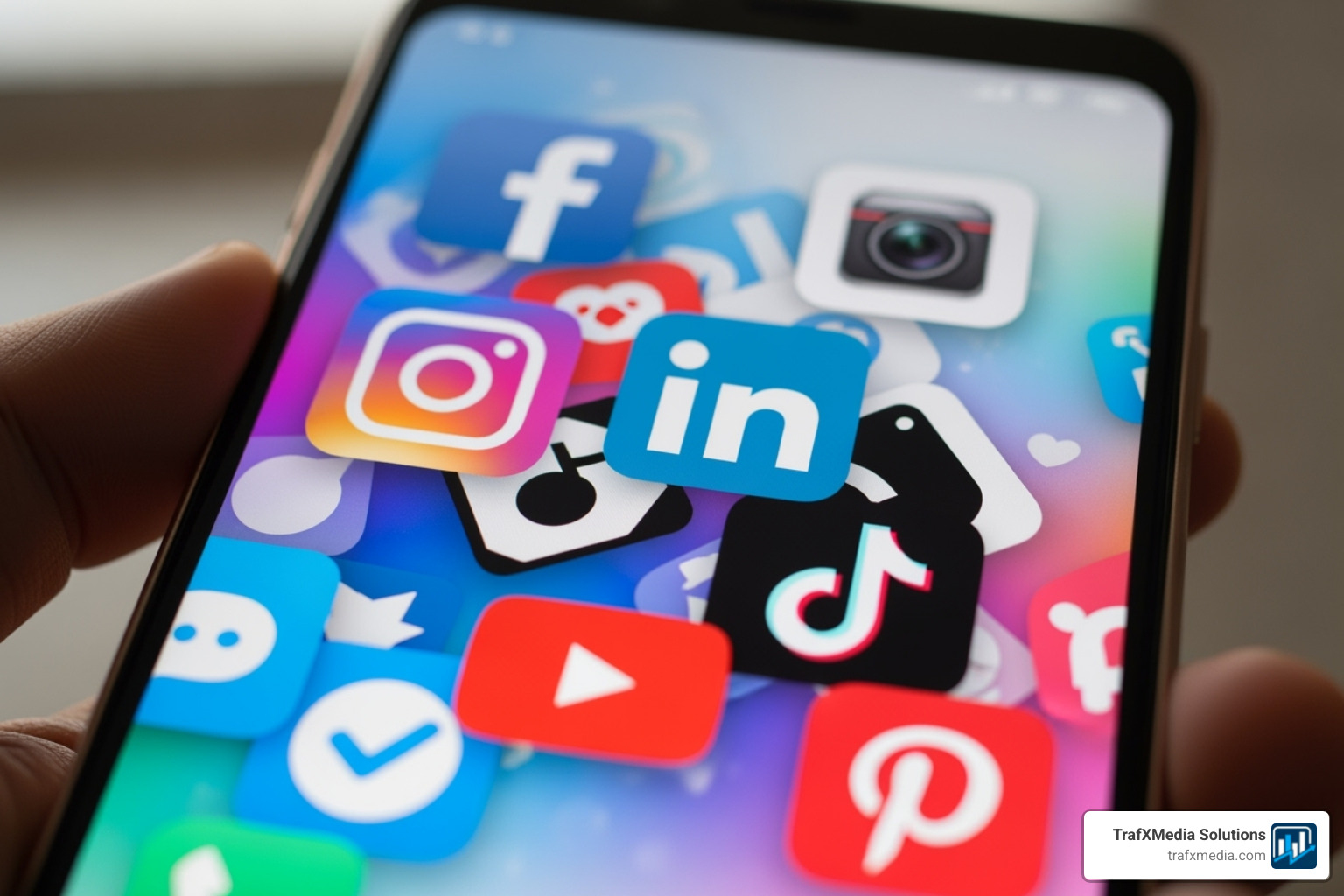
For small businesses, a strong social media presence is no longer optional. The top social media platforms for small business success include Facebook for community building, Instagram for visual marketing, LinkedIn for B2B networking, TikTok for viral content, YouTube for video authority, and Pinterest for product findy. Each platform serves different business goals and audience types.
Quick Platform Selection Guide:
- Facebook: Best for local businesses and community engagement (2.9 billion users)
- Instagram: Ideal for visual brands and product showcases (72% purchase influence)
- LinkedIn: Essential for B2B services and professional networking (1+ billion users)
- TikTok: Perfect for creative content and younger audiences (45% SMB growth attribution)
- YouTube: Top choice for tutorials and brand storytelling (2.5 billion users)
- Pinterest: Great for inspiration-driven purchases (522 million users)
Over 96% of small business owners use these platforms to boost brand visibility. The data is clear: 51% of consumers find new brands through social media, and 48% make purchases after seeing ads. The challenge isn’t if you should use social media, but which platforms to choose. A local bakery’s strategy will differ vastly from a B2B consulting firm’s because their customers are in different digital spaces.
I’m Richard Taylor of TrafXMedia Solutions. Having guided digital strategies for brands like Intel and Louis Vuitton, I’ve seen how selecting the right platform mix can transform a small business into a thriving local presence. This guide will help you identify the top social media platforms for small business success.
Essential top social media platforms for small business terms:
How to Choose the Right Social Media Platform for Your Business
Choosing the right social media platforms is critical, but you don’t need to be everywhere. You just need to be where it matters most for your business. The top social media platforms for small business success are the ones where your customers are already active and ready to engage. A focused strategy on the right channels will always outperform a scattered presence on every platform.
1. Start with Your Audience, Not the Platform
This is the most important step. Before you even consider a platform’s features, you must deeply understand who you are trying to reach. A 25-year-old fashion enthusiast uses social media differently than a 55-year-old business consultant. Go beyond basic demographics and create a detailed customer avatar. Ask questions like: What are their biggest challenges? What kind of content do they consume? Where do they seek recommendations online? What is their communication style? Understanding these psychographic details helps you find them in the right digital spaces and speak their language. A guide to researching your social media target audience can walk you through this process of building detailed personas.
2. Define Your Business Goals
What do you want to achieve with social media? Vague goals like “get more followers” are not effective. Your social media objectives should be SMART (Specific, Measurable, Achievable, Relevant, and Time-bound) and tie directly to your overall business goals. Are you aiming for brand awareness, lead generation, direct sales, or customer service? Each goal points toward different platforms and content strategies. For example, a goal for brand awareness might be “Increase our Instagram reach by 20% in Q3,” while a lead generation goal could be “Generate 15 qualified leads per month through LinkedIn content.”
3. Consider B2B vs. B2C
This distinction is crucial for platform selection. B2C (business-to-consumer) companies often thrive on highly visual and trend-driven platforms like Instagram, Facebook, and TikTok, where users browse casually and are open to product findy. B2B (business-to-business) companies, however, generally find more success on platforms like LinkedIn, where professionals gather to network, learn, and make business decisions. That said, don’t be afraid to cross boundaries. A B2B company can use Instagram to showcase company culture and attract talent, while a B2C brand might use LinkedIn to build partnerships with retailers.
4. Match Content Strengths to Platform Expectations
What type of content can you create consistently and well? Be honest about your skills and resources. If you sell beautiful products or have a visually appealing service, platforms like Instagram and Pinterest are natural fits. If you excel at creating engaging video content, focus your energy on TikTok and YouTube. For businesses that thrive on in-depth articles, industry insights, and professional discussions, LinkedIn and Facebook are better choices. Your content must align with what users expect to see on that platform to be effective.
5. Be Honest About Your Resources
Your time and budget are finite. It’s far better to excel on one or two well-chosen platforms than to spread yourself thin across five with mediocre content. Factor in the time required not just for creating content, but also for engaging with your audience, responding to comments, and analyzing performance. Start with an organic content strategy to build a foundation and understand what resonates. Once you have that data, you can strategically invest in paid advertising to amplify your best-performing posts and accelerate your results. Consider budgeting for helpful tools for scheduling (like Buffer or Hootsuite) and design (like Canva) to streamline your workflow.
6. Learn from Similar Businesses
Conduct a competitive analysis to see what other businesses in your industry are doing successfully. Don’t copy them, but learn from them. Identify 3-5 direct and indirect competitors and analyze their social media presence. Which platforms are they on? What kind of content gets the most engagement (likes, comments, shares)? What is their brand voice? This research helps you spot opportunities, identify content gaps you can fill, and avoid common mistakes. You can always test a new platform based on your findings, evaluate the results, and adjust your strategy accordingly.
The Top Social Media Platforms for Small Business
Now that we understand how to choose, let’s explore the leading platforms in greater detail. Each offers distinct advantages, depending on your goals and audience. Think of them like different San Francisco neighborhoods—each with its own culture, etiquette, and purpose. The key is finding where your business fits best and can build a genuine community.
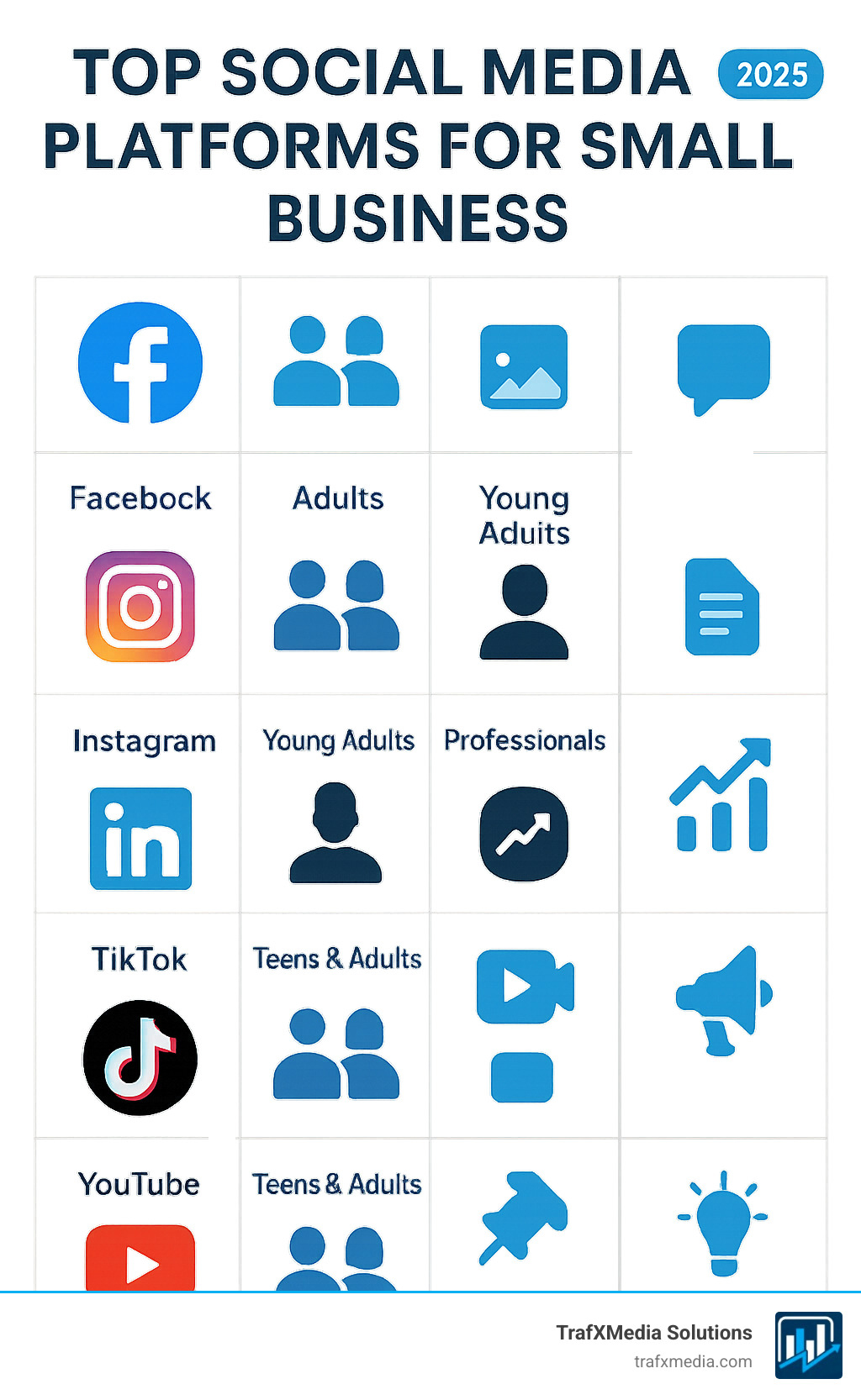
| Platform | Best For | Primary Audience | Key Content Format |
|---|---|---|---|
| Community Building, Local Businesses | Broad (Millennials, Retirees) | Posts, Photos, Videos, Groups, Events | |
| Visual Marketing, Product Showcases | Younger Demographics (18-34) | Photos, Reels, Stories, Live | |
| B2B Networking, Professional Services | Professionals, Businesses | Articles, Company Updates, Job Postings | |
| TikTok | Viral Content, Creative Marketing | Gen Z, Younger Millennials | Short-Form Videos |
| YouTube | Video Authority, Tutorials | All Ages (especially 18-49) | Long-Form Videos, Shorts, Live Streams |
| Product Findy, Visual Inspiration | Females (esp. 25-54), Planners | Pins, Boards, Idea Pins, Product Catalogs |
Facebook: The Community Builder
With over 2.9 billion monthly active users, Facebook remains one of the most versatile and powerful top social media platforms for small business owners. Its core strength lies in fostering genuine customer connections and community engagement. For local San Francisco businesses, this is invaluable, as two-thirds of Facebook users visit a local business’s page at least once a week. The platform’s highly effective targeted advertising is used by 89% of marketers to pinpoint customers based on demographics, interests, and behaviors with best precision.
To succeed, go beyond simple posts. Create a Facebook Group for your most loyal customers to offer exclusive content and build a powerful brand advocacy network. Use Facebook Events to promote workshops, sales, or local gatherings. The platform supports a rich variety of content, from text updates and photo albums to long-form video and Reels, which now garner over 200 billion views daily. This flexibility allows you to test different formats and see what your specific audience responds to best. Facebook serves as a central hub for your business—a place for announcements, customer service, and community.
Instagram: A Top Social Media Platform for Small Business Visuals
For businesses with visually appealing products or services, Instagram is a growth engine. Its purchasing power is significant: 72% of users make purchases after seeing products on Instagram, and 50% have bought something after seeing it in Stories. Success on Instagram requires a strong visual identity and high-quality photos and videos. Your feed should tell a cohesive brand story.
Leverage the platform’s full suite of features. Use Instagram Reels for short, entertaining, and educational videos that can reach a massive new audience beyond your followers. Use Instagram Stories for daily, behind-the-scenes content and interactive features like polls and Q&As to engage your community directly. Ads shot on mobile for Stories often perform 63% better than polished studio content, proving that authenticity wins. The platform’s seamless shopping features, like product tags in posts and Reels, allow customers to buy directly, capitalizing on impulse buys. It’s also the ideal platform for encouraging and showcasing user-generated content (UGC), which acts as powerful social proof and builds trust with potential customers.
72% of users make purchases after seeing products on Instagram
LinkedIn: The Top Social Media Platform for Small Business B2B Networking
For B2B companies, LinkedIn is the undisputed leader among the top social media platforms for small business. With over 1 billion users globally, its audience is there for professional development, networking, and industry learning, making them highly receptive to business-related content. The platform excels at B2B lead generation, with 89% of B2B marketers using it for this purpose. When businesses advertise on LinkedIn, they see an average 33% increase in purchasing intent.
Success on LinkedIn requires a dual strategy. Use your personal profile to build thought leadership by sharing in-depth articles, posting valuable insights, and engaging in thoughtful conversations. Use your Company Page as a professional storefront to share company news, highlight your culture, post job openings, and run targeted ad campaigns. Sharing detailed case studies and industry analysis helps establish the expertise and trust that are vital for long B2B sales cycles. LinkedIn is not about the hard sell; it’s about building professional relationships and demonstrating value over time. It’s also a prime channel for talent acquisition, with 72% of businesses using it for hiring.
TikTok: The Viral Trendsetter
Once dismissed as a platform for teens, TikTok has evolved into one of the top social media platforms for small business, offering massive organic reach and engagement. Its powerful algorithm can amplify content from brand-new accounts, allowing small businesses to gain traction quickly. This has led 45% of small businesses on TikTok to attribute significant growth to the platform. The key to TikTok is authenticity and relatability. Users reward behind-the-scenes content, personality-driven videos, and brands that don’t take themselves too seriously.
Trend-based marketing is crucial here; participating in trending sounds, effects, and challenges can lead to viral success. Create content pillars that fit your brand, such as “pack an order with me,” educational tips, or “a day in the life” videos. While it started with Gen Z, its user base is expanding rapidly, with 55% of weekly US users now aged 18-34. Crucially for business, 64% of weekly users say ads on TikTok help them decide what to buy, and the platform’s Spark Ads feature allows you to boost your best-performing organic videos for even greater impact.
45% of SMBs on TikTok attribute growth to the platform
YouTube: The Video Authority
As the world’s second-most-visited website, YouTube is essential for building authority and trust through video. With 2.5 billion monthly active users, it offers tremendous SEO benefits, as Google often prioritizes video content in search results. This makes YouTube a powerhouse for creating evergreen content—tutorials, how-to guides, and detailed product reviews that remain relevant and attract viewers for years.
The platform is perfect for building trust by showing the real people and processes behind your business. Educational content performs exceptionally well, as 83% of consumers prefer watching videos on YouTube to learn. This makes it ideal for tutorials and product demos that position your business as an expert. Its long-form content capability allows for in-depth guides and brand storytelling that isn’t possible on other platforms. The platform also drives sales, with 40% of shoppers having purchased products they finded on YouTube. While monetization is possible through the YouTube Partner Program, its primary value for most small businesses is top-of-funnel awareness and customer acquisition.
Pinterest: The Inspiration Engine
Pinterest functions less like a social network and more like a visual search engine where users actively find ideas, plan projects, and shop. For businesses with strong visuals in niches like home decor, fashion, food, weddings, and DIY, it’s one of the top social media platforms for small business to drive traffic and sales. Its 522 million active monthly users have high purchase intent; a staggering 87% of users have bought a product because of content they saw on Pinterest.
Its greatest strength is that every Pin can link directly to your website, making it a powerful source of referral traffic with an incredibly long content lifespan—a single Pin can drive traffic for months or even years. Success requires a strong SEO strategy. Use relevant keywords in your Pin titles, descriptions, and board names to ensure your content appears in user searches. By creating themed boards and utilizing features like Product Catalogs and Idea Pins, you can offer a curated shopping experience that feels inspiring, not pushy, connecting with customers at the exact moment they are looking for a solution and are ready to act.
Best Practices for Social Media Success
Choosing the top social media platforms for small business is the first step. To succeed, you need a strategic approach that turns your social presence into a reliable business tool. Success isn’t about luck or going viral overnight; it’s about consistent, strategic effort that builds genuine connections and delivers measurable results.

Create and Schedule High-Quality Content
Quality always beats quantity. Start with a content calendar to plan posts in advance, aligning them with business goals, holidays, local San Francisco events, and product launches. This ensures you’re prepared and consistent. Consistency builds trust; find a sustainable rhythm, whether it’s three Facebook posts per week or daily Instagram Stories. Develop an authentic brand voice and maintain it across platforms. Your visuals don’t need to be professionally shot, but they must be clear and thoughtful—use good lighting and clean backgrounds. Use captions to provide value, tell stories, and ask questions to encourage engagement. Remember to adapt your message for each platform’s unique culture. A witty caption on TikTok might not work for a professional LinkedIn article. Creating high-quality content that captures attention is key. Use scheduling tools to post at optimal times and batch your content creation—dedicating a few hours one day to create content for the entire week—to save time and maintain visibility.
Master Your Social Media Analytics
Analytics tell you what your audience loves and what they ignore. Don’t just post and hope for the best; use data to make informed decisions. Focus on actionable metrics over vanity metrics. A high follower count (vanity metric) is meaningless if your engagement rate (actionable metric) is low.
- Engagement rate (likes, comments, shares per follower) is often more valuable than follower count, as it shows how many people truly interact with your content.
- Reach and impressions measure your content’s visibility. Growing reach with falling engagement suggests a need to improve content quality.
- Click-through rates (CTR) and conversions connect social media efforts to business results like website traffic, leads, and sales. This is where you measure ROI.
- Audience demographics reveal who is following you, helping you confirm you’re reaching your target audience and create more targeted content.
The real power is using analytics to refine your strategy. If tutorial videos on YouTube get high watch time, make more. If afternoon posts on Facebook get more engagement, adjust your schedule. Use simple A/B testing on headlines or image styles to learn what your audience wants. Using specialized analytics tools to get richer data can further improve your strategy.
Leverage AI for Social Media Marketing
AI can amplify your creativity and efficiency, not replace your strategy. For small businesses, AI tools are invaluable for handling routine tasks, freeing you to focus on high-level strategy and customer connections.
- AI content creation tools like AI caption generators can help you overcome writer’s block and brainstorm ideas. Always review and edit AI-generated content to add your unique brand voice and ensure accuracy.
- Automated scheduling powered by AI can analyze your past performance and suggest the optimal times to post for maximum engagement.
- AI-powered chatbots on your website or Facebook Messenger can handle basic customer service inquiries 24/7, improving response times and customer satisfaction.
Use AI as a smart assistant to handle repetitive tasks so you can focus on the human element of social media: building genuine relationships and creating a community around your brand. Using ChatGPT for social media tasks can streamline many of these processes.
Frequently Asked Questions about Social Media for Small Business
Social media can be overwhelming, and it’s easy to get lost in the details. Here are clear, straightforward answers to the most common questions we hear from San Francisco business owners.
How many social media platforms should a small business be on?
Less is more. Start small and focus on 1-3 platforms where your target audience is most active and engaged. It is far more effective to have a thriving, engaged community on two platforms than a weak, neglected presence on six. Trying to be everywhere at once is the fastest path to burnout and poor results. A local San Francisco bakery will likely find its core audience on visual platforms like Facebook and Instagram, while a B2B consulting firm should prioritize building authority on LinkedIn. Master one platform and understand its nuances before you consider adding another. As a best practice, it’s wise to secure your brand’s username or handle on all major platforms early on to protect your brand for future use.
How much time should a small business spend on social media?
There is no magic number, but consistency is more important than frequency. A realistic goal for most small businesses is 30-60 minutes per day dedicated to focused social media activities. To make this manageable, batch your content creation. Dedicate a few hours once a week to plan, create, and schedule all your posts. This frees up your daily time for high-impact activities that build relationships, such as responding to comments and messages promptly, and engaging with content from your customers and other local businesses. This proactive engagement is often more valuable than simply posting and walking away.
What’s more important: organic content or paid ads?
This is not an either/or question. The most successful social media strategies use both organic content and paid ads working together in a powerful synergy.
Start with organic content to build your foundation. This is how you establish trust, showcase your brand’s personality, and build a genuine community without a constant sales pitch. It’s also the most cost-effective way to test different messages, formats, and ideas to see what truly resonates with your audience. Your organic content is your long-term relationship-building tool.
Once you’ve identified your top-performing organic posts—the ones that get the most engagement and clicks—use paid ads to scale your success. Paid advertising allows you to amplify that proven content, reaching a much wider, highly targeted audience to drive specific actions like website visits, lead form submissions, or direct sales. Think of it this way: organic builds the loyal fanbase, while paid ads put your best work on the biggest stage.
Conclusion
We’ve explored the social media landscape, from choosing the right channels to understanding the unique strengths of the top social media platforms for small business: Facebook, Instagram, LinkedIn, TikTok, YouTube, and Pinterest.
The most important takeaway is that there is no one-size-fits-all strategy. Success comes from a plan custom to your specific audience, business goals, and resources. By selecting the right platforms, sharing high-quality content consistently, and using analytics, your small business can achieve remarkable, tangible results.
Here at TrafXMedia Solutions, we understand the unique pulse of San Francisco’s business community. We craft personalized digital marketing strategies designed to deliver measurable growth. We can help you find the perfect social media mix, develop content that resonates with your customers, and turn online engagement into real business success.
Ready to lift your social media strategy?
Develop your custom social media strategy with our expert services