

Everything You Need to Know About Small Business Social Media
Introduction: Your Gateway to Growth
Small business social media is no longer a nice-to-have; it’s a powerful tool for growth. With billions of active users worldwide, social media platforms offer an excellent opportunity to connect with customers and thrive.
Why is social media marketing essential for small businesses?
- Increased Brand Awareness: Reach millions of potential customers and build brand recognition.
- Direct Customer Engagement: Connect directly with your audience to foster relationships and loyalty.
- Lead Generation: Turn social interactions into concrete business opportunities.
- Driving Sales: Convert followers into paying customers through targeted efforts.
- Cost-Effectiveness: Achieve significant marketing reach without a large budget.
Social media is one of the most cost-effective ways for small businesses to build brand awareness, connect with the right audience, and drive real results, even without a big budget. This guide will walk you through everything you need to know about using social media to grow your business, covering strategy, content, engagement, and more.
As Richard Taylor, an SEO strategist and business consultant at TrafXMedia Solutions, my expertise in small business social media helps companies steer the digital landscape to achieve measurable growth.
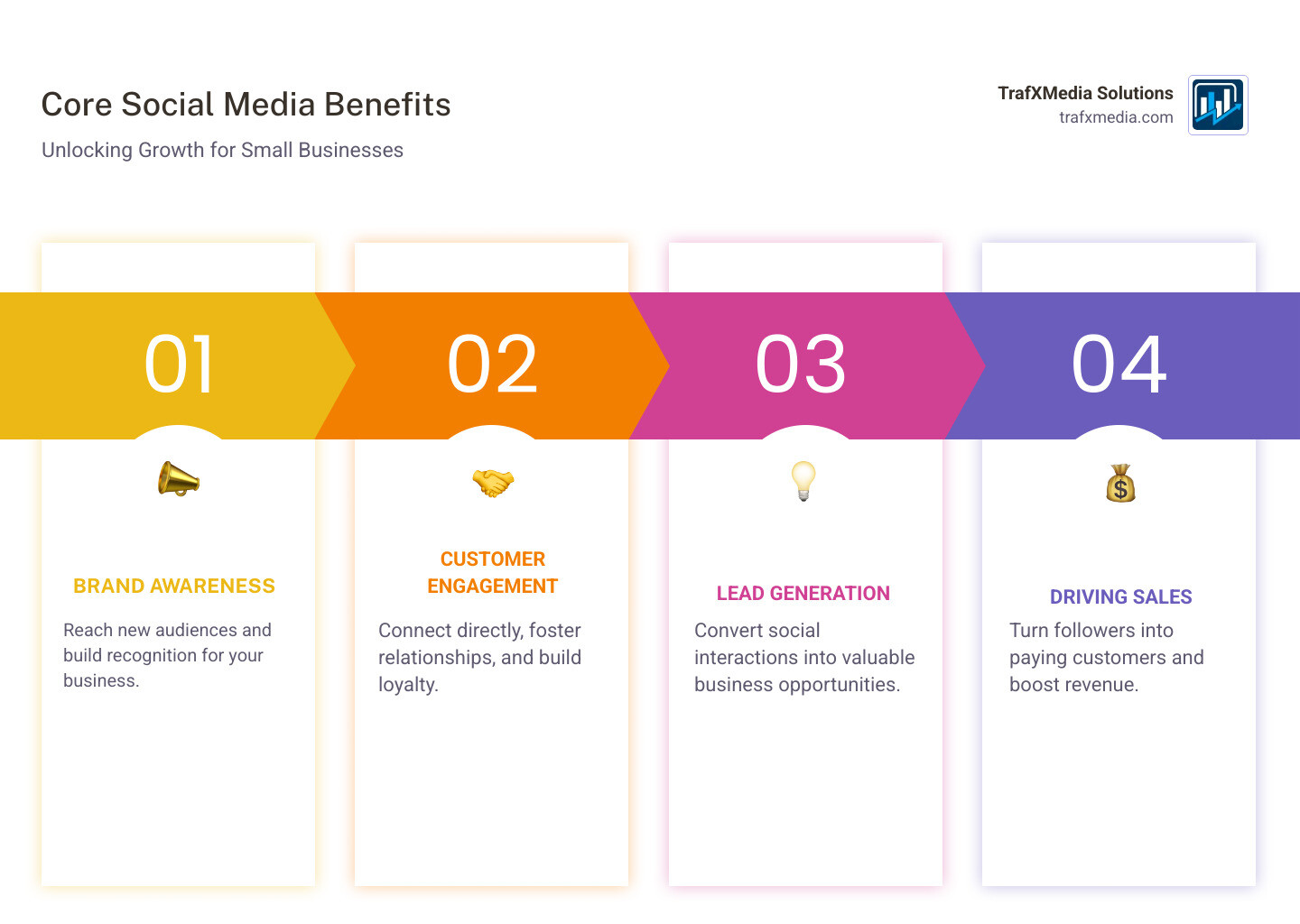
Key terms for small business social media:
Why Social Media is a Game-Changer for Small Businesses
Social media is your business’s digital front door, leveling the playing field for small businesses. With over 5 billion people using social media worldwide, it offers an audience larger than any traditional advertising medium.
Brand awareness grows effortlessly when you’re consistently visible where customers spend their time. Over 70% of small to midsize businesses use social media for marketing, with 52% posting daily to stay memorable.
Social media excels at building genuine relationships. Unlike one-way advertising, it allows you to talk with your audience. Responding to comments and answering questions shows the human side of your business, and studies show 80% of consumers are more likely to buy from brands after positive social media interactions.
The impact on your bottom line is also significant. Social media is a powerful engine for driving website traffic and increasing sales. Nearly half of internet users are likely to purchase from brands they see advertised on social media.
Customers also expect to find you on social media for customer service. They want quick answers, and these platforms provide that instant connection. Prompt, helpful responses build trust and show you care.
Perhaps most valuable is the audience insights social media provides. Every like, comment, and share offers data about customer wants and needs, which can inform key business decisions from product development to marketing strategies.
In today’s market, a strong social media presence provides a distinct competitive advantage, allowing small businesses to compete with larger companies without massive budgets. The beauty of small business social media is that it rewards authenticity and creativity. Your genuine voice can resonate more deeply than polished corporate campaigns, so don’t let inexperience hold you back.
Building Your Winning Small Business Social Media Strategy
A winning small business social media strategy requires a clear plan. Without one, you’re posting aimlessly. With a strategy, every post has a purpose and moves you closer to your business goals.
Start with Clear, Achievable Goals
Before you post, define what success looks like using SMART goals (Specific, Measurable, Achievable, Relevant, Time-bound). These transform vague hopes into concrete targets.
Examples of goals include:
- Increase brand visibility: Grow your follower count by 25% in six months.
- Generate leads: Drive 100 new email subscribers from social media each month.
- Drive online sales: Set targets for conversion rates from social platforms.
- Build a community: Measure success through engagement rates and meaningful comments.
- Establish industry authority: Track content shares and mentions from others in your field.
These goals will guide every decision you make, turning social media into a strategic business tool.
Know Your Audience Inside and Out
Successful small business social media is about reaching the right people. You need to understand your audience deeply.
Start by researching your target demographics. Create detailed customer personas to visualize the real people you’re trying to reach. Understand their pain points, interests, and problems. Equally important is their online behavior: which platforms they use and when. Use platform analytics and external research like Pew’s demographic data to gain insights. The goal is to make your content feel like it was created just for them.
Choose the Right Platforms for Your Business
It’s better to excel on a few relevant platforms than to be mediocre on many. Each platform has its own audience and content preferences.
| Platform | Primary Audience | Best For | Top Content Formats |
|---|---|---|---|
| Broad, all demographics (esp. older) | Community Building, Broad Reach, Local Businesses | Video, Images, Text Posts, Events, Groups | |
| Gen Z/Millennials, Visual users | Visual Brands, Lifestyle, Product Showcase | Images, Short-form Video (Reels), Stories, Carousels | |
| Professionals, B2B | Professional Networking, Thought Leadership, Lead Generation | Articles, Text Posts, Industry News, Professional Videos | |
| TikTok | Gen Z, Younger Millennials | Authentic Storytelling, Viral Trends, Short-form Video | Short-form Video, Challenges, Behind-the-Scenes |
Facebook is excellent for community building and reaching a broad, local audience. Instagram thrives on visual storytelling, perfect for businesses with photogenic products. LinkedIn is the go-to for B2B networking and establishing professional credibility, offering the best opportunities for thought leadership. TikTok is effective for reaching younger audiences with authentic, entertaining content. Choose platforms where your audience is active and your content can shine.
Analyze What Your Competitors Are Doing
Competitive analysis helps you understand what works in your industry and find opportunities to stand out. Identify similar businesses and observe their social media presence.
- What content gets the most engagement?
- How often do they post and what tone do they use?
- Are there content gaps you can fill?
Look for patterns in what resonates with your shared audience. Pay attention to their successes and failures to avoid months of trial and error. Use this analysis to find your unique angle and distinctive voice. The goal isn’t to blend in, but to stand out and attract your ideal customers.
Creating and Managing Content That Captivates

With your strategy in place, it’s time to create content. Content is the heartbeat of your small business social media presence, sharing your personality and offering value to build connections with your audience.
Develop a Consistent Content Plan and Calendar
A consistent posting schedule is crucial for keeping your audience engaged. A content plan and calendar provide a roadmap for your content. Your plan should cover:
- Content themes: Decide on topics like behind-the-scenes glimpses, customer spotlights, industry tips, or product showcases.
- Posting frequency: Determine how often you’ll post on each platform. Quality always beats quantity, but aim for consistency (e.g., 3-5 times a week on Facebook/Instagram).
- Content mix: Balance promotional posts with content that educates, entertains, and engages to avoid turning followers off.
Using social media management tools to schedule posts in advance saves time and ensures content goes live at optimal times. A simple content calendar template can help you organize your copy, links, and visuals, ensuring a consistent brand voice that supports your goals.
The Critical Role of High-Quality Visuals
Social media is highly visual, and eye-catching graphics, photos, and videos are essential for grabbing attention. People form an impression of your brand in a fraction of a second, and strong visuals communicate your message faster than words.
Tips for effective visuals:
- High-resolution photos: Use crisp, professional images to make your brand look more polished and trustworthy.
- Video content: Short-form videos and carousels often perform exceptionally well, showing your product or service in action.
- Branded graphics: Use consistent brand colors, fonts, and logos. Tools like Canva can help you create stunning visuals. Explore resources like Up & Running with Canva to learn more.
- Infographics: Break down complex information into shareable, easy-to-digest formats.
Original content that highlights your business’s unique qualities is what makes a brand memorable. Experiment with different formats to see what resonates with your audience.
Best Practices for Engaging Your Audience
Social media is a conversation, not a billboard. Successful strategies focus on engagement.
- Two-way conversations: Respond to comments and DMs promptly to show you’re listening and value your audience.
- Ask questions and run polls: Spark interaction in captions and Stories to boost engagement and gain valuable audience insights.
- Encourage User-Generated Content (UGC): Encourage customers to share photos or videos with your products. UGC builds authenticity and trust. Always reshare these posts to show appreciation.
- Showcase authenticity: Let your brand’s personality shine. Share behind-the-scenes moments or discuss challenges to build a genuine connection.
- Treat social as a resource: Provide valuable educational content and helpful resources to position your brand as an expert, not just a seller.
- Personalized service: Personalizing responses is a top priority for social media users and is often more impactful than high-frequency posting.
By nurturing genuine interactions, you’ll build a loyal community of brand advocates.
Measuring Success and Optimizing Your Small Business Social Media Performance

How do you know if your social media efforts are paying off? Measuring success tells you if you’re on the right path and helps you optimize your strategy. Focus on metrics that truly impact your bottom line, not just “likes.”
Key Metrics to Track for Your Small Business Social Media
These are the vital signs for your small business social media health:
- Engagement Rate: The percentage of your audience that interacts (likes, comments, shares, saves) with your content. High engagement means your content resonates.
- Reach and Impressions: Reach is the number of unique people who see your content. Impressions are the total number of times your content was displayed. These metrics gauge visibility.
- Website Clicks: This shows how effectively your social media drives traffic to your website, where conversions happen.
- Follower Growth: Consistent organic growth indicates your content is appealing to new, relevant audiences.
- Conversion Rate: The percentage of users who complete a desired action (e.g., purchase, sign-up). This is the ultimate indicator of business impact.
- Return on Investment (ROI): Measures the profitability of your social media efforts, proving it’s a worthwhile investment.
Most social media platforms offer built-in analytics tools. Regularly review these reports to understand what works and refine your strategy for better results.
Leveraging Paid Social Media Advertising
While organic reach is great, paid social media advertising can accelerate your growth by putting your content in front of new, highly specific audiences.
- Targeted campaigns: Ad platforms let you pinpoint ideal customers based on demographics, interests, and behaviors, making your budget work smarter.
- Boosting high-performing posts: Amplify the reach of successful organic posts with a small budget to show them to more people like your engaged audience.
- A/B test ad creative: Experiment with different headlines, images, or calls to action to find the winning formula that resonates with your audience.
- Reaching new audiences: Paid ads are fantastic for expanding beyond your current followers and connecting with potential customers looking for businesses like yours.
Using AI and Automation to Improve Efforts
Artificial Intelligence (AI) and automation can streamline tasks, boost efficiency, and provide deeper insights, freeing you up to focus on your business.
- AI for content ideas: Use AI tools to brainstorm topics and captions, overcoming writer’s block.
- Automated scheduling: Use management platforms to schedule posts in advance, ensuring consistency without daily effort.
- Social listening tools: Monitor conversations about your brand and industry to spot trends and manage your reputation.
- AI-powered chatbots: Use chatbots for instant answers to frequently asked questions. However, consumers still prefer a human touch for personalized interactions. It’s often best to use AI for backend tasks like analytics and targeting, preserving human connection for customer conversations.
By thoughtfully incorporating AI and automation, you can work smarter and improve your effectiveness.
Common Pitfalls and How to Avoid Them
Even well-intentioned businesses can stumble with small business social media. Most mistakes are easily avoidable once you know what to watch for.
The biggest trap is posting without a strategy. A scatter-shot approach leads to inconsistent messaging and wasted effort. Your posts should be purposeful communications that move your business forward.
Another common mistake is being overly promotional. Your audience is on social media to connect and be entertained, not just to be sold to. Balance promotional posts with content that provides genuine value.
Many businesses also ignore their audience. Social media is a conversation. Ignoring comments and messages makes your brand feel cold and unapproachable, and you miss valuable feedback.
The one-size-fits-all approach is another pitfall. Content should be adapted for each platform’s unique audience and expectations to improve results.
Finally, neglecting analytics is like driving blind. Without checking your metrics, you can’t tell what’s working. You might waste effort on ineffective content while missing opportunities to double down on what resonates. Success requires patience, consistency, and a willingness to learn.
Handling Negative Feedback and Crises
Negative feedback can be tough, but how you handle it can strengthen your brand’s reputation.
- Have a plan: Decide in advance who responds and how, so you can act thoughtfully, not reactively.
- Respond quickly and thoughtfully: Acknowledge feedback promptly. A quick response shows you’re listening, even if the full solution takes time.
- Acknowledge the issue honestly: Validate the person’s feelings. People want to be heard, and acknowledgment can defuse a tense situation.
- Take the conversation offline: For complex issues, offer to continue via DM, email, or phone. This keeps sensitive details private and shows you’re serious about resolving the problem.
- Never delete negative comments: Unless a comment contains hate speech or spam, don’t delete it. Deleting legitimate complaints suggests you have something to hide. Address concerns transparently.
Every negative comment is an opportunity to demonstrate your commitment to customer service and turn an unhappy customer into a loyal advocate.
Conclusion: Turn Your Social Media into a Growth Engine
We’ve explored how small business social media can be a powerful engine for business growth. It’s no longer just about being present online; it’s about being strategic, authentic, and consistent to connect with your audience. With over 5 billion people on social media, your potential customers are waiting to find brands like yours.
Here are the key takeaways:
- Strategy is essential: Clear goals, audience understanding, and smart platform choices guide every action.
- Consistency and authenticity win: Show up regularly with genuine value to build the trust that turns followers into customers.
- Measure and optimize: Use analytics to understand what’s working. Combine organic efforts with strategic paid ads and automation to create a system that works for you.
- Learn from challenges: Mistakes happen. Handling pitfalls and negative feedback professionally can strengthen customer loyalty.
You don’t need a huge budget to succeed—just consistency, creativity, and a willingness to connect. As a small business, your ability to be personal and responsive is a significant advantage.
At TrafXMedia Solutions, we’ve seen how a custom social media strategy can transform local San Francisco businesses. We understand your unique challenges and craft personalized strategies that reflect your brand and connect with your audience.
Ready to transform your social media presence into a powerful growth engine? We’re here to help you steer the digital landscape with strategies designed for your business.
Explore our comprehensive digital marketing services to lift your brand.