
Small Town, Big Rankings: Local Business SEO Strategies Explained
What is Local SEO and Why Does Your Business Need It?
Local business SEO strategies are techniques that help businesses appear in location-based searches, driving nearby customers to their doorsteps. The power of local search is undeniable: 46% of all Google searches are for local information, and 80% of local searches on mobile devices lead to a conversion. When someone searches for “coffee shop near me,” they’re ready to buy.
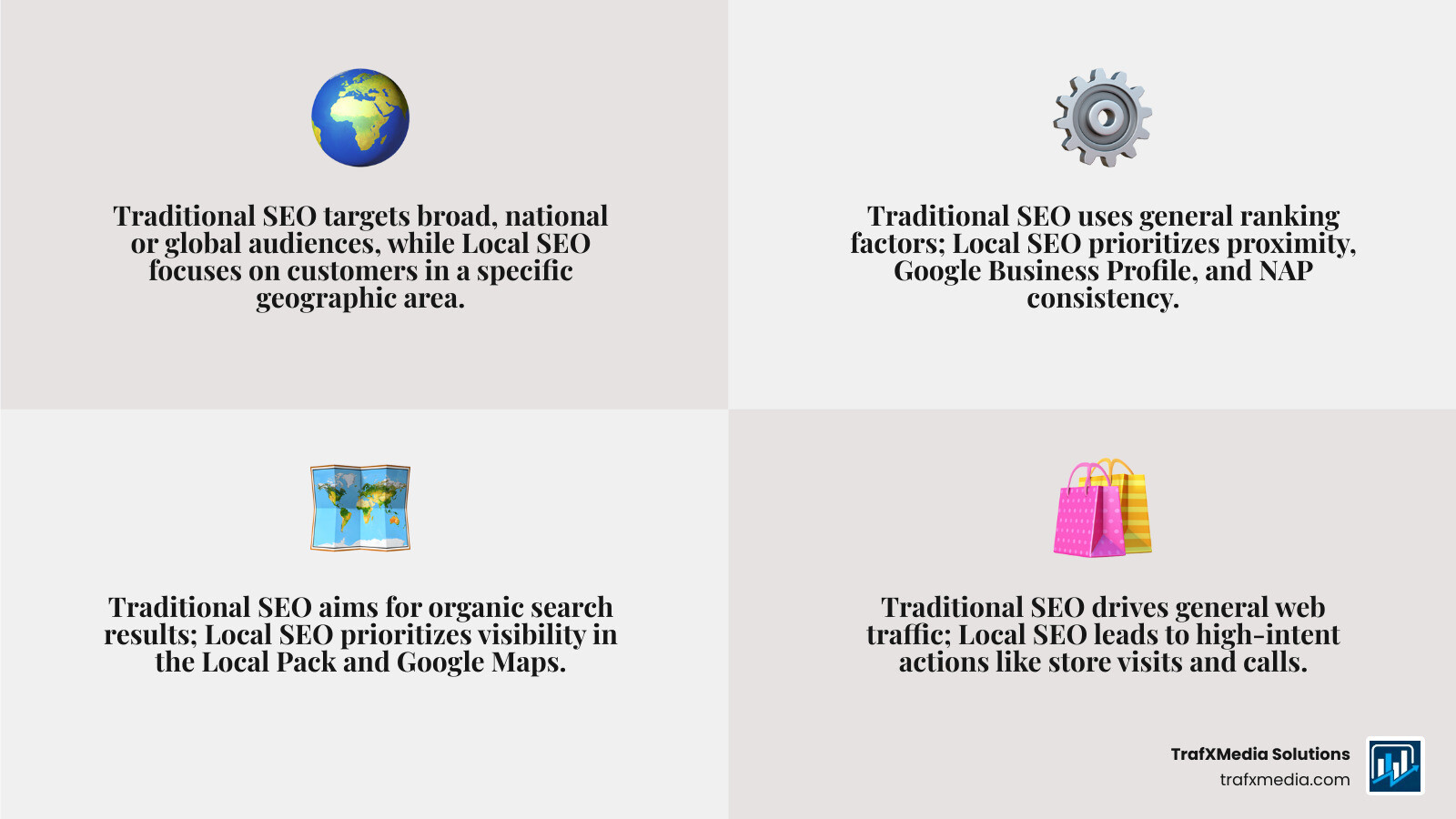
Unlike traditional SEO, local SEO focuses on connecting you with customers in your immediate area. It’s about being found when it matters most. With 97% of consumers investigating a company’s online presence before visiting, a strong local SEO strategy directly impacts your bottom line. The fact that only 56% of local businesses have claimed their Google Business Profile creates a massive opportunity for you to stand out.
The Power of Local Search in Today’s Market
Today, up to 98% of customers use the internet to find local businesses. The digital world is the new storefront. When someone searches for a local service, they have high purchase intent. This is why an estimated 50% of users visit a store within a day of conducting a local search. Your online presence is where customers assess your credibility, especially when 95% of them read reviews before making a purchase. Our SEO services in San Francisco, CA, are designed to help local businesses harness this power.
How Google Ranks Local Businesses: The Core Factors
Google’s local rankings are based on three pillars: Relevance, Distance, and Prominence.
- Relevance: How well your business matches the search query. A fully detailed Google Business Profile is key to signaling relevance.
- Distance: How close your business is to the searcher’s location. This is why “near me” searches are so powerful.
- Prominence: How well-known your business is. This is influenced by reviews, online citations, and backlinks to your website. A strong online reputation makes you more prominent.
These factors determine your visibility in the “Local Pack” (the map and 3 business listings at the top of search results) and the organic results below. To improve your local ranking, we focus on maximizing these core factors.
Mastering Your Digital Storefront: Google Business Profile Optimization
Your Google Business Profile (GBP) is your digital front door and the cornerstone of local SEO. It’s often a customer’s first impression, and with only 56% of local businesses having claimed their listing, a well-optimized profile gives you a significant edge.
Claiming and Verifying Your Essential Listing
First, you must claim and verify your business. Search for your business on Google Maps and click “Claim this business.” If it’s not there, create a new profile. Verification, usually via a postcard mailed to your address, is crucial. It gives you control over your information, allows you to respond to reviews, and prevents inaccuracies. Be sure to find and remove any duplicate listings, which can confuse customers and hurt your ranking. You can manage your business profile directly through Google’s platform.
Filling Out Your Profile for Maximum Impact
A complete profile sends strong signals to Google and customers. Focus on these areas:
- Business Name: Use your exact, official name. No keyword stuffing.
- Categories: Choose a specific primary category and add all relevant secondary ones.
- Services & Products: Detail everything you offer to appear in more specific searches.
- Business Description: Write a compelling summary highlighting what makes you unique.
- High-Quality Photos & Videos: Businesses with photos get 42% more requests for directions and 35% more clicks to their website. Showcase your location, products, and team.
- Attributes: Add details like “Wheelchair accessible” or “Free Wi-Fi.”
- Q&A Section: Proactively answer common questions to provide helpful information.
- Google Posts: Share updates, offers, and news to keep your profile fresh.
Foundational Local Business SEO Strategies: On-Site and Content Wins

Your website is your digital home base. Optimizing it for local search helps both customers and search engines understand who you are, what you do, and where you do it.
How to Implement On-Page Local Business SEO Strategies
On-page SEO means optimizing individual pages. Key elements include:
- Title Tags & Meta Descriptions: Include your main service and location in your title tag (e.g., “Best Italian Restaurant in North Beach, San Francisco”). Write a compelling meta description to earn clicks.
- Header Tags (H1, H2): Structure your content with headers that include local keywords.
- URL Structure: Use clean, descriptive URLs (e.g.,
yourbusiness.com/services/plumber-san-francisco). - Internal Linking: Connect related pages on your site to guide users and search engines. The Seven Commandments of Internal Linking for Top-Notch SEO is a great resource.
- Image Alt Tags: Describe images with alt text for accessibility and SEO.
Creating Content That Connects with Your Community
Become a local authority by creating valuable, localized content.
- Location-Specific Pages: If you serve multiple areas, create a unique page for each one.
- Local Content: Write blog posts about community events, create neighborhood guides, or answer questions relevant to your area.
- Showcase Expertise: Share local knowledge and add a Google Map to your website to reinforce your location.
Essential Technical SEO for Local Visibility
A solid technical foundation is crucial.
- Mobile-First: Your site must be responsive and easy to use on mobile, where most local searches occur.
- Page Speed: A fast website is a ranking factor and improves user experience.
- LocalBusiness Schema: Use structured data to help search engines understand your business details and display them as rich snippets.
Building Trust Off-Site: Citations, Reviews, and Local Links

Your online reputation extends beyond your own website. Off-site Local business SEO strategies involve building trust and authority signals across the web that Google uses to validate your business.
The Critical Role of NAP Consistency and Citations
NAP stands for Name, Address, and Phone Number. This information must be identical across every online platform. Inconsistencies confuse search engines and can harm your rankings.
Citation building is the process of getting your business listed on online directories and platforms. These listings act as votes of confidence. Ensure your information is correct on major data aggregators like Express Update, Neustar Localeze, and Foursquare, as well as key directories like Yelp, Apple Maps, and your local Chamber of Commerce.
Managing Your Online Reputation with Customer Reviews
Online reviews are incredibly influential, as 95% of customers read them before making a purchase. The quantity, quality, and recency of your reviews are strong ranking signals for Google.
- Encourage Reviews: Simply ask satisfied customers to leave feedback. Make it easy by providing a direct link to your Google review page.
- Respond to All Reviews: Thank customers for positive feedback. For negative reviews, respond promptly and professionally. Acknowledge their concern and offer to resolve the issue offline. This demonstrates excellent customer service and builds trust.
Advanced Local Business SEO Strategies for Community Engagement
Genuine community involvement can generate powerful local SEO signals.
- Local Link Building: Earn links from other local websites, such as news outlets, community blogs, or non-competing local businesses.
- Sponsorships & Partnerships: Sponsoring a local event, charity, or sports team can earn you valuable mentions and links. Partnering with complementary businesses for cross-promotion is also effective.
- Local PR: Share interesting stories about your business with local news outlets to gain media coverage and authoritative backlinks.
Measuring Success: Tools and Audits for Local SEO
Once you’ve implemented your local business SEO strategies, the work isn’t over. Local SEO is an ongoing journey, not a destination. To ensure your efforts are paying off and to identify areas for improvement, consistent performance tracking and regular audits are essential.
Essential Tools for Your Local SEO Toolkit
Navigating the local SEO landscape is much easier with the right tools in your belt. These can help you monitor your performance, uncover new opportunities, and keep an eye on your competition.
- Keyword Research Tools: These tools help you find what local customers are searching for. While many popular tools exist, even Google’s own Keyword Planner can give you insights into local search volumes and related terms.
- Rank Tracking Software: To know if your efforts are improving your visibility, you need to track your rankings. Look for tools that can specifically track your position in the Local Pack and organic ‘blue link’ results for various local keywords. Some tools can even track your ranking from different points on a map, showing you how your visibility changes based on proximity to the searcher.
- Citation Management Tools: These help you find, build, and manage your business citations across hundreds of directories, ensuring NAP consistency and identifying potential errors.
- Website Analytics: Tools like Google Analytics are indispensable for understanding your website traffic. You can see how many local users are visiting your site, where they’re coming from, what pages they’re viewing, and whether they’re converting into leads or customers.
- Google Search Console (GSC): This free tool from Google is a must-have. It provides insights into how Google sees your website, flags any indexing issues, shows you which queries you’re ranking for, and highlights mobile usability problems.
- Backlink Analysis Tools: These help you analyze your own backlink profile and, crucially, that of your competitors. Understanding who links to your rivals can uncover new link-building opportunities for your business.
How to Conduct a Basic Local SEO Audit
A local SEO audit is like a health check-up for your online presence. It helps you identify strengths, weaknesses, and opportunities. Here’s a basic checklist you can use:
| Area to Check | Key Questions to Ask – |
What is Local SEO and Why Does Your Business Need It?
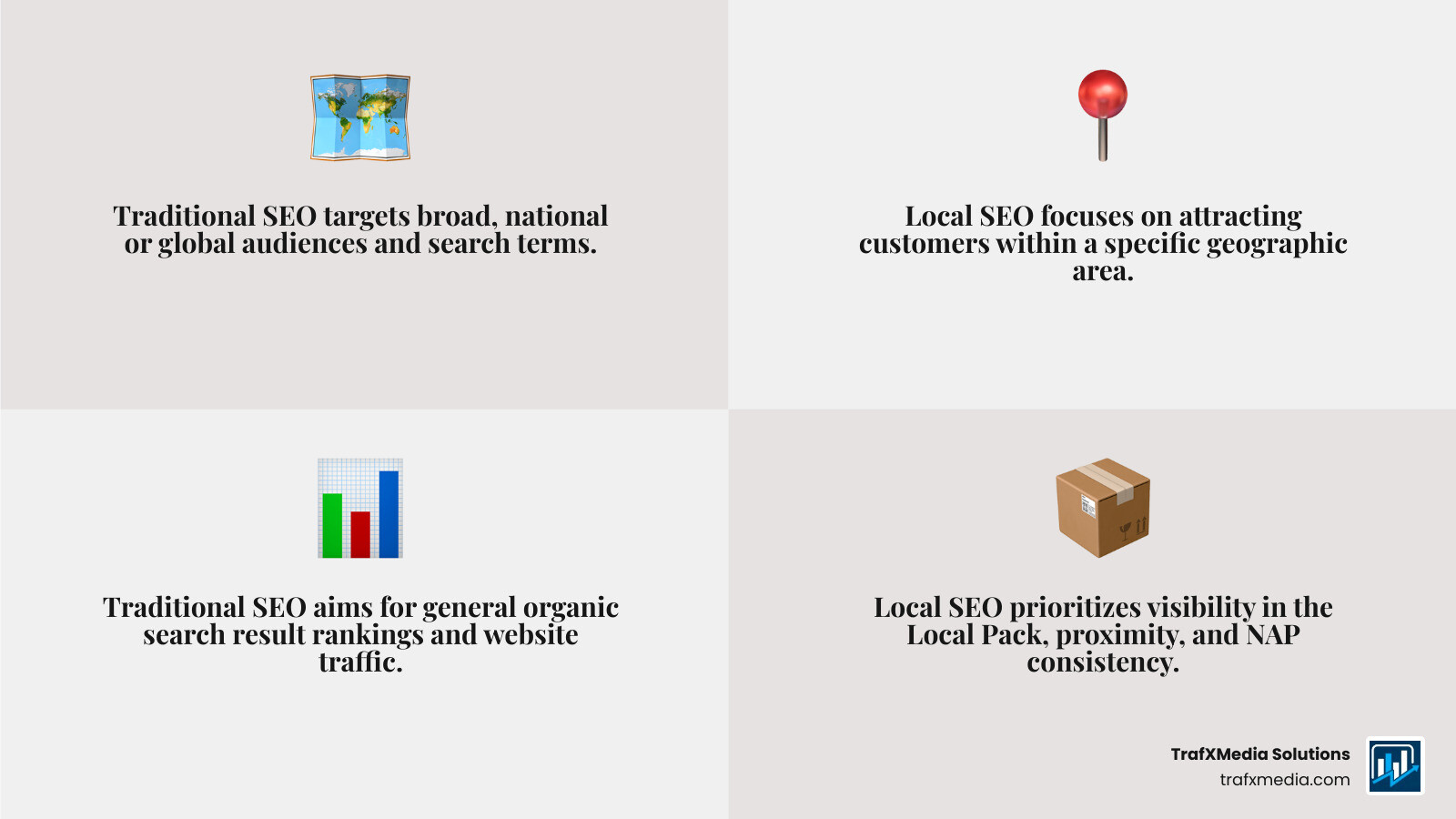
Local SEO is the strategic process of optimizing your online presence to attract more customers from a specific geographic area. Unlike traditional SEO, which casts a wide net for national or global visibility, local SEO focuses on your immediate vicinity—your city, your neighborhood, and even your street. The driving force behind its power is search intent. When someone performs a local search, such as the 250% increase in “near me” searches since 2017 demonstrates, their intent is almost always immediate and transactional. They aren’t just browsing; they are looking for a solution, a product, or a service right now.
This optimization ensures your business appears prominently in location-specific search results, primarily within Google’s Local Pack (the map with three business listings at the top of the page), the Local Finder (the expanded list of businesses you see after clicking “View all”), and on Google Maps. The rise of mobile devices has made this non-negotiable. With 61% of all Google searches performed on mobile, your business must be easily findable on a small screen. This visibility translates directly to increased foot traffic and higher conversion rates. A remarkable 80% of local searches on mobile devices lead to a conversion, and 50% of users visit a store within a day of conducting a local search. For small businesses, mastering local SEO creates a significant competitive advantage, especially since many local competitors are still lagging in their online optimization, leaving the door wide open for you to capture high-intent customers.
The Power of Local Search in Today’s Market
Today, up to 98% of customers turn to the internet when searching for information about local businesses. This digital shift is the new norm, making your online presence the modern-day storefront. When someone searches for “San Francisco Italian food,” they are a high-intent customer ready to make a decision. In fact, 18% of local searches result in a purchase within 24 hours. Beyond immediate sales, a strong local SEO presence builds foundational trust. With 95% of customers reading reviews before making a purchase, your online presence acts as your digital handshake, conveying credibility, professionalism, and social proof before a customer ever interacts with you directly. Our SEO services are designed to help your San Francisco business tap into this powerful local market and build a trustworthy brand.
How Google Ranks Local Businesses: The Core Factors
Google’s local algorithm is complex, but it relies heavily on three core pillars: Relevance, Distance, and Prominence.
Relevance: This is the measure of how well your business profile matches what a customer is searching for. It’s the most fundamental piece of the puzzle. To signal relevance, you must provide Google with detailed and accurate information. This includes selecting the most specific business categories, writing in-depth descriptions of your services and products, and ensuring your website content reflects your local offerings. If you’re a plumber who specializes in emergency repairs, your profile and content should explicitly state that.
Distance: This factor considers how close your business is to the searcher’s location or the location specified in their search query (e.g., “plumber in the Mission District”). Google uses a user’s device location data (if enabled) or clues from their search terms to calculate proximity. While you can’t change your business’s physical address to rank better in a different neighborhood, you can ensure your location information is perfectly accurate online and create content that signals your service area, which can help you appear in searches from a wider radius.
Prominence: This refers to how well-known and respected your business is, both online and offline. Google measures this through a variety of signals. Online, prominence is built through the quantity and quality of positive online reviews, the number of consistent citations (mentions of your business’s Name, Address, and Phone number) across the web, and the authority of backlinks pointing to your website from other reputable local sites. A business with a high volume of recent, positive reviews and links from the local news and Chamber of Commerce is seen as more prominent than a business with no digital footprint. A comprehensive strategy targets all three pillars. To dive deeper, we recommend reviewing Google’s own guidance on the matter.
Mastering Your Digital Storefront: Google Business Profile Optimization
Your Google Business Profile (GBP) is the undisputed cornerstone of your local SEO efforts and your most important digital storefront. It’s a dynamic profile that allows you to showcase your business directly on Google Search and Maps. Making it pristine, complete, and active is the single most impactful thing you can do to attract local customers.
Claiming and Verifying Your Essential Listing
Before you can optimize, you must have control. First, search for your business on Google. If a profile already exists, look for a link that says “Own this business?” or “Claim this business.” If no profile exists, you can create one from scratch. The next step, verification, is non-negotiable. Google needs to confirm your business is legitimate and located where you say it is. Verification methods include:
- Postcard by mail: The most common method. Google sends a postcard with a unique code to your business address, which you then enter online.
- Phone or text: Some businesses are eligible for verification via an automated call or text to their business phone number.
- Email: Available for certain businesses, where a code is sent to a business email address (e.g., you@yourdomain.com).
- Video recording: You may be asked to record a video showing your location, equipment, and proof of management.
This step is crucial because it grants you exclusive control over your business information, enables you to respond to reviews, and prevents malicious actors from making unauthorized changes. During this process, you should also diligently search for and resolve any duplicate listings, as they can confuse customers, split your review equity, and dilute your SEO authority. You can easily manage your business profile directly through Google’s dedicated platform.
Filling Out Your Profile for Maximum Impact
An incomplete profile is a massive missed opportunity. Treat every section as a chance to provide value to customers and send strong ranking signals to Google. Fill out every applicable field with detail and accuracy:
- Business Name: Use your exact, official business name as it appears on your signage and legal documents. Do not add keywords or city names (e.g., “Joe’s Pizza” not “Joe’s Pizza – Best Pizza in San Francisco”). This is against Google’s guidelines and can lead to profile suspension.
- Categories: This is a critical ranking factor. Choose the most specific primary category that represents your core business (e.g., “HVAC Contractor” instead of just “Contractor”). Then, add all relevant secondary categories to capture more specific searches (e.g., “Air Conditioning Repair Service,” “Furnace Repair Service”).
- Services & Products: Detail everything you offer. Use the Services section to list all your services with descriptions and even prices. This helps you rank for long-tail searches like “emergency furnace repair after hours.” The Products section is great for showcasing specific items with photos and prices, even for service-based businesses.
- Business Description: You have 750 characters to tell your story. Craft a concise, compelling summary of what makes your business unique. Naturally include important keywords, but focus on speaking to your ideal customer.
- High-Quality Photos & Videos: Businesses with photos get 42% more requests for driving directions and 35% more clicks to their website. Don’t just upload your logo. Add clear, high-resolution photos of your storefront (exterior), your space (interior), your team at work, and your products. Videos can be even more engaging—consider a short virtual tour or a clip of your team in action.
- Attributes: These are specific tags that help customers filter results. Select all applicable attributes, such as “Wi-Fi,” “Outdoor seating,” “Wheelchair accessible entrance,” and identity attributes like “Women-owned” or “Veteran-led.”
- Q&A Section: This is a powerful, user-generated feature. Proactively add and answer your own frequently asked questions to control the narrative and provide helpful information upfront. Monitor this section for new questions from customers and answer them promptly.
- Google Posts: Use Posts to share timely updates, events, special offers, and new products. Posts keep your profile looking fresh and active, signaling to Google that you are an engaged business owner. They are mini-ads that appear directly on your profile, complete with a call-to-action button.
Foundational Local Business SEO Strategies: On-Site and Content Wins
While your Google Business Profile is the cornerstone, your website is your digital home base. It’s the property you own and control completely. For local businesses, optimizing this space is paramount to guide both search engines and high-intent customers directly to your door.
How to Implement On-Page Local Business SEO Strategies
On-page SEO involves optimizing the content and structure of individual web pages to rank higher. For local businesses, this means strategically weaving local signals throughout your site.
- Title Tags & Meta Descriptions: These are your digital billboard in search results. Your title tag should include your primary service and location (e.g., “Expert Boiler Repair in North Beach, San Francisco”). Your meta description is your sales pitch; it should be a compelling summary that makes users want to click.
- Header Tags (H1, H2, etc.): Use headers to create a logical structure for your content. Your main page title should be an H1 tag. Use H2 and H3 tags for subheadings, including local keywords and service variations where they make sense (e.g., H2: “Our San Francisco Plumbing Services”).
- NAP & Map Integration: Your business Name, Address, and Phone number (NAP) should be clearly visible on your website, ideally in the footer of every page. The address should match your GBP exactly, and the phone number should be in a click-to-call format for mobile users. Embedding a Google Map of your location on your contact page is another strong local signal.
- URL Structure: Keep URLs clean, simple, and descriptive. A good structure like
yourbusiness.com/services/plumber-san-franciscois far better for users and search engines thanyourbusiness.com/page-id-123. - Internal Linking: Link between relevant pages on your site to distribute authority and guide users. For example, a blog post about “winterizing your pipes” should link to your main “plumbing services” page. For more on this, see The Seven Commandments of Internal Linking for Top-Notch SEO.
- Alt Tags for Images: Add descriptive alt text to your images. This helps visually impaired users and gives search engines context about the image content. Instead of
img_8765.jpg, describe it:alt="plumber-fixing-leaky-pipe-in-san-francisco-home".
Creating Content That Connects with Your Community
Creating valuable, localized content establishes your business as the go-to local authority and attracts highly relevant traffic.
- Location-Specific Landing Pages: If you serve multiple distinct areas (e.g., different cities or neighborhoods), create a unique, dedicated page for each one. Do not simply copy content and swap the city name. A high-quality location page includes: unique descriptions of your services in that area, testimonials from local customers, photos of jobs completed there, and mentions of local landmarks or neighborhoods. This demonstrates genuine local expertise.
- Local Content & Blogging: Go beyond your services. Write blog posts about local news and events, create neighborhood guides, interview other local business owners, or answer common questions your local customers have. A San Francisco-based roofer could write about “Choosing the Best Roofing Material for Bay Area Fog and Sun.” This content attracts local links and builds topical authority.
Essential Technical SEO for Local Visibility
The technical foundation of your website ensures that search engines can efficiently crawl, understand, and rank your site.
- Mobile-First Indexing: With 61% of Google searches on mobile, your site must be fully responsive and provide an excellent user experience on all devices. This means fast load times, easy-to-read text, and large, tappable buttons.
- Website Speed: Page speed is a confirmed ranking factor. A slow site frustrates users and leads to higher bounce rates. Use tools like Google’s PageSpeed Insights to diagnose and fix issues like large images, slow server response times, and render-blocking code.
- Structured Data (Schema Markup): This is one of the most powerful technical SEO tactics for local businesses. Schema is a type of code that you add to your website to help search engines understand your content more effectively. By implementing LocalBusiness schema, you explicitly tell Google your NAP, hours, and business type. This can help you earn rich snippets in search results, such as star ratings or event info, making your listing more eye-catching and clickable. You can learn how to add local business schema to your site and use Google’s Rich Results Test to validate your implementation.
Building Trust Off-Site: Citations, Reviews, and Local Links
Beyond your own website, your online reputation across the wider web plays a decisive role in local SEO. This “off-site” optimization is all about building signals of trust, authority, and prominence that Google values highly when deciding which business to show for a local search.
The Critical Role of NAP Consistency and Citations
NAP (Name, Address, Phone Number) is your business’s digital fingerprint. It must be perfectly consistent everywhere your business is mentioned online, from your website to your social media profiles to major directories. Inconsistent NAP (e.g., using “St.” on one site and “Street” on another) confuses search engines and can significantly harm your local rankings.
Citation building is the process of getting your consistent NAP listed on reputable online directories, social media platforms, and other websites. These mentions act as third-party verifications or “votes of confidence” for your business’s existence and location. A robust citation profile is built from a mix of sources:
- Data Aggregators: Services like Data Axle, Neustar Localeze, and Foursquare feed your business data to hundreds of other online directories. Getting your information correct here is a crucial first step.
- Major Local Directories: These are the big players like Yelp, Apple Maps, Yellow Pages, and Bing Places. You must claim and manage these profiles actively.
- Niche & Hyperlocal Directories: These include industry-specific sites (e.g., Avvo for lawyers, Houzz for contractors) and local-only platforms like your city’s Chamber of Commerce website or a neighborhood business directory. These are highly relevant signals.
Regularly performing a citation audit to find and correct inconsistencies is a foundational local SEO task.
Managing Your Online Reputation with Customer Reviews
Customer reviews are the modern-day word-of-mouth and a massive factor in both rankings and conversions. With 95% of customers reading reviews before making a purchase, a strong review profile is essential for building trust. Google looks at review quantity, velocity (how frequently you get them), and quality (the star rating and content).
- Encourage Reviews: You must have a proactive process for asking for reviews. Don’t be shy—ask satisfied customers directly. Make it easy by providing a direct link to your Google review page via email, text message, or a QR code on your receipts or in-store signage. Never offer incentives for reviews, as this violates Google’s policies.
- Respond to All Reviews: Responding shows you care about customer feedback. Thank customers for positive reviews and mention a specific detail they brought up. For negative reviews, respond promptly, politely, and professionally. Acknowledge their concern, apologize for their poor experience (without admitting fault if it’s not yours), and offer to take the conversation offline to resolve the issue. This demonstrates excellent customer service to all future customers reading the reviews.
Advanced Local Business SEO Strategies for Community Engagement
Genuine community involvement is a powerful and sustainable way to build the highest quality off-site signals: local links.
- Local Link Building: Earning links from other well-regarded local websites is a huge signal of prominence. This isn’t about spamming forums; it’s about relationship building. Sponsor a local youth sports team, a charity 5k, or a community festival—these often result in a link from their website. Host a free workshop or a community event at your location and promote it to local bloggers and news outlets.
- Sponsorships & Partnerships: Partnering with complementary, non-competing local businesses for cross-promotion can be highly effective. A wedding planner could partner with a local florist and photographer, linking to each other as preferred vendors. These are highly relevant local links.
- Local PR: Develop relationships with local journalists, reporters, and influential bloggers. Share interesting stories about your business—a major milestone, a charity initiative, a unique new product—to gain media coverage. A single story in a local news outlet can result in an incredibly authoritative backlink that significantly boosts your local prominence.