

Five-Star Flavor, Five-Star Reviews: Restaurant Reputation Management Made Easy
Why Restaurant Reputation Management is Your Secret Ingredient for Success
Reputation management for restaurants is the strategic process of monitoring, influencing, and responding to online reviews and customer feedback to build trust, attract new diners, and protect your brand’s image.
Key components of restaurant reputation management:
- Monitor – Track reviews on Google, Yelp, TripAdvisor, and social media.
- Respond – Reply professionally to all feedback, ideally within 24-48 hours.
- Generate – Encourage satisfied customers to leave reviews.
- Analyze – Use feedback to identify operational improvements.
- Protect – Address fake reviews and manage crises before they escalate.
Imagine a busy street corner. One restaurant is empty, while the one next door has a 30-minute wait. The difference? Their online reputation.
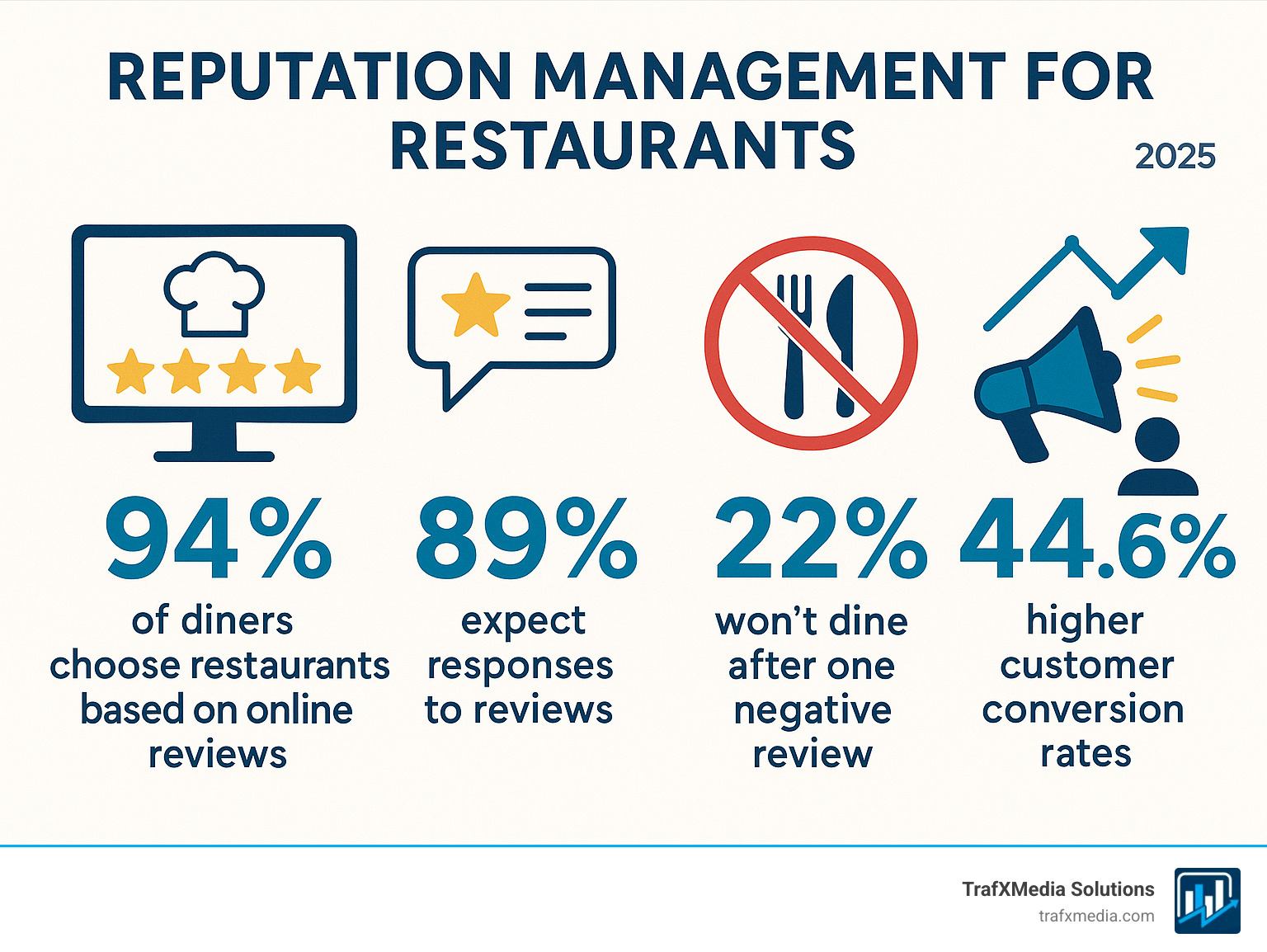
Statistics show that 94% of diners choose restaurants based on their online reviews. A single negative review can deter 22% of potential customers. On the flip side, restaurants that actively manage their reputation see a 5% to 9% revenue increase for every star they gain on review platforms.
Your restaurant’s online reputation is your most powerful marketing tool. Before a potential customer in San Francisco tastes your signature dish, they’ve already formed an opinion based on what they see online. The good news is that you have control over this narrative.
I’m Richard Taylor, an SEO strategist and business consultant. Through my work with restaurants, I’ve seen how effective reputation management for restaurants can transform struggling establishments into local favorites. My experience combines technical SEO with practical reputation strategies that deliver measurable results.
Know your reputation management for restaurants terms:
- crisis management for businesses
- local SEO reputation management
- online reputation management san francisco
Why Your Digital Storefront Matters More Than Ever
Your restaurant’s online presence is your digital storefront. When someone searches “best brunch in San Francisco,” your digital reputation either wins or loses that customer.
Reputation management for restaurants is about actively monitoring what people say, responding thoughtfully, and creating an online presence that reflects the quality of your in-person experience. This builds the trust that turns browsers into loyal customers.
The numbers tell a compelling story. According to a recent survey, 91% of young consumers trust online reviews as much as personal recommendations. A five-star rating is often the deciding factor. Furthermore, research shows that increasing customer retention by just 5% can boost profits by 25% to 95%. A strong online reputation doesn’t just attract new faces; it creates a loyal community that keeps coming back.
The Tangible Benefits of a Sterling Reputation
An excellent online reputation ripples through your business. It helps you attract new customers with glowing reviews that act as 24/7 testimonials. It boosts search engine visibility, as Google rewards businesses that customers love. This, in turn, improves your local SEO, bringing more “near me” searches to your door. You also gain valuable operational feedback from reviews, helping you identify what’s working and what isn’t. Finally, by engaging with customers online, you build a loyal community and stand out in a crowded market like San Francisco.
What Happens When Your Reputation is Ignored?
The alternative isn’t pretty. Ignoring your online presence is like leaving your front door dirty—people will notice and walk away.

Lost revenue is the most immediate impact. Research shows that 22% of customers won’t dine at a restaurant after reading just one negative review. An unanswered negative review suggests you don’t care. This leads to a damaged brand image, as negative stories can spread quickly online. You may also face difficulty attracting quality staff, as top talent wants to work for reputable establishments. This allows your competitors to gain the advantage, welcoming the customers that should have been yours. Fortunately, these problems are preventable with a solid approach to reputation management for restaurants.
The Core Ingredients: Essential Strategies for Restaurant Reputation Management
Think of reputation management for restaurants like perfecting a recipe. It requires a clear strategy that balances proactive and reactive approaches. Consistency in your voice and authenticity in your personality are key ingredients that build trust and credibility with diners.
Great reputation management begins with operational excellence and exceptional customer service. When your staff is trained to handle issues in person, many negative reviews can be prevented before they’re ever written. Your goal is a seamless guest experience, from their first online search to their final bite.
The Foundation: Proactive Reputation Management for Restaurants
Building a stellar reputation starts with getting your digital house in order. This is your prep work. First, claim and optimize your online profiles. Your Google Business Profile is your top priority, as it’s crucial for local search and Maps. Ensure your hours, menu, photos, and contact info are always accurate. Also, manage your presence on Yelp and TripAdvisor, especially in a food-focused city like San Francisco.
Pay close attention to NAP consistency (Name, Address, Phone number). These details must be identical everywhere online to avoid confusing search engines and hurting your rankings. Invest in high-quality photos of your food and ambiance—blurry smartphone pictures won’t cut it. Finally, keep your menus and hours updated religiously to avoid frustrating potential customers.
Choosing the Right Tools for Reputation Management for Restaurants
As your restaurant grows, reputation management software can save you hours each week. Look for tools with these key features:
- All-in-one dashboard: Consolidates reviews from Google, Yelp, Facebook, and other platforms into one place.
- Real-time alerts: Notifies you instantly when a new review is posted so you can respond quickly.
- Sentiment analysis: Identifies trends and patterns in customer feedback, like recurring complaints or compliments.
- Review response templates: Speeds up your workflow while allowing for personalization.
- Analytics and reporting: Tracks your average ratings, response times, and other key metrics to measure progress.
- Review generation tools: Helps you request feedback from satisfied customers via email, SMS, or QR codes.
Mastering the Art of the Reply: Your Guide to Online Review Management
Every review response is a public conversation. When you reply thoughtfully, you show every potential customer that you care about the guest experience.

This isn’t just good manners; it’s good business. Data shows that 89% of customers expect a response to their online review. Responding with timeliness, professionalism, and empathy is crucial.
Responding to Negative Reviews: A Step-by-Step Guide
A negative review is an opportunity. In fact, one study found that 44.6% of customers are more likely to visit a business if they see the owner responding to criticism professionally.
- Acknowledge and Apologize: Start by thanking them for the feedback and apologizing that their experience fell short. “We’re sorry to hear your visit didn’t meet expectations.”
- Resist Being Defensive: Your reply is for all future readers. An argumentative tone will alienate far more people than just the original reviewer.
- Take It Offline: For complex issues, invite the reviewer to contact you directly via phone or email to resolve the matter privately.
- Offer a Solution: When appropriate, suggest a return visit or another gesture of goodwill to show you’re committed to making things right.
- Learn from Feedback: Treat negative reviews as free consulting. If you see a pattern, you’ve identified an operational issue to fix.
Celebrating Positive Reviews and Encouraging More
Don’t ignore your biggest fans. Responding to positive reviews reinforces good feelings and encourages loyalty.
- Thank and Personalize: Go beyond a simple “Thanks!” Mention a specific detail from their review. “We’re so glad you loved the seafood risotto!”
- Make It Effortless: Use QR codes on receipts that link directly to your review pages. Include links in follow-up emails.
- Train Your Staff: Empower your team to ask happy guests for feedback. A friendly, “We’d love to hear about your visit on Google!” can work wonders.
- Showcase Testimonials: Feature your best five-star reviews on your website and social media to build powerful social proof.
Beyond the Plate: Leveraging Social Media for a Sterling Reputation
Your social media is a powerful engine for reputation management for restaurants. With over 40% of diners researching restaurants on social media, your Instagram and Facebook accounts are extensions of your dining room where you can showcase your restaurant’s unique personality.

User-generated content (UGC) is your secret weapon. When customers post photos and tag your restaurant, they provide authentic marketing that carries more weight than any ad. You can also consider influencer partnerships with local food bloggers who align with your brand’s values.
Social media is also a primary customer service platform. Responding to questions and concerns publicly and gracefully demonstrates your commitment to customer satisfaction and builds trust through transparency.
Building an Engaging Social Media Presence
- Be Consistent: Establish a regular posting schedule so your audience knows when to expect content.
- Focus on Visuals: Use high-quality photos and videos that capture not just the food, but the entire experience—the sizzle, the plating, the happy customers.
- Create Interactive Content: Use polls, questions, and contests to make followers feel involved in your restaurant’s story.
- Be Responsive: Acknowledge comments and DMs quickly to show there are real people behind the brand.
- Humanize Your Brand: Share behind-the-scenes content, introduce your team, and tell the stories behind your dishes. People connect with people, and this builds warmth and trust.
From Kitchen Fire to PR Win: Managing an Online Reputation Crisis
Even the best restaurants can face a reputation crisis, from a viral negative video to a poor health inspection report. The key to navigating these storms is preparedness. A crisis can become an opportunity to showcase your restaurant’s character and commitment to your customers.
Have a plan. Know who on your team is responsible for what. Designate a spokesperson and have response templates ready. This roadmap keeps you professional when emotions are high.
Act quickly. A prompt acknowledgment that you are aware of the situation is crucial. Silence allows others to control the narrative and suggests you don’t care. This is a vital part of reputation management for restaurants.
Communicate internally. Ensure your entire team is on the same page about the situation and how to respond to customer inquiries. This prevents confusion and conflicting messages.
Be honest and transparent. If you made a mistake, own it. A public statement should acknowledge the issue, express sincere regret, and outline the concrete steps you are taking to fix the problem and prevent it from recurring.
Rebuild trust through action. Consistently demonstrate that you have learned from the experience. This might involve retraining staff or upgrading processes. Show, don’t just tell.
Monitor the situation post-crisis. Keep an eye on review sites and social media to gauge your recovery and address any lingering concerns. A well-handled crisis can ultimately strengthen customer loyalty.
Frequently Asked Questions about Restaurant Reputation
Here are answers to the most common questions we hear from restaurant owners about reputation management for restaurants.
How do I handle a fake or malicious review?
First, check if the review violates the platform’s terms of service (e.g., hate speech, spam, clear conflict of interest). If it does, report or flag it immediately. While you wait for the platform to investigate, post a calm, professional public response. You can state that you have no record of the customer’s visit and that you take all feedback seriously. This shows other readers that you are attentive and provides context that the review may not be genuine.
Is it okay to offer incentives for reviews?
This is a risky area. Major platforms like Yelp and Google strictly forbid offering compensation for reviews, as it can lead to penalties like review removal or a suspended listing. The Federal Trade Commission (FTC) also has strict guidelines requiring disclosure for endorsed reviews. The safest and most effective path is to earn reviews organically. Create an amazing experience and train your staff to politely ask happy customers to share their feedback online.
How much time should I dedicate to reputation management?
Less time than you might think, once you have a system. The initial setup and optimization of your profiles might take a few hours. After that, plan on 15-30 minutes daily to monitor new reviews and social mentions. Consistency is more important than the total time spent. Reputation management software can significantly streamline this process by consolidating all your feedback into one dashboard and providing alerts, cutting down your daily commitment to just a few minutes.
Conclusion: Keep Your Reputation as Fresh as Your Ingredients
Just as a great dish requires quality ingredients, a strong online reputation needs constant attention and authentic engagement. We’ve seen that reputation management for restaurants is no longer optional—it’s essential for success.
Your digital presence directly impacts your bottom line. When 94% of diners use online reviews to choose a restaurant and a single star increase can boost revenue by up to 9%, the message is clear. Your online reputation is as critical as your physical location.
Effective reputation management is an ongoing process. It combines proactive profile management, thoughtful review responses, engaging social media, and a solid crisis plan. For restaurants in San Francisco’s competitive market, mastering this digital landscape is key to survival and growth.
Navigating this alone can be challenging. While these strategies provide a strong foundation, a dedicated partner can help accelerate your growth. At TrafXMedia Solutions, we specialize in creating personalized digital marketing strategies for Bay Area businesses. We understand that your restaurant has a unique story, and we build strategies that deliver the results you need to thrive.
Your reputation deserves the same care you put into every plate that leaves your kitchen. Every review and response is an opportunity to show potential diners why they should choose you.
Get expert help with your San Francisco SEO strategy and find how the right digital marketing partner can help your restaurant’s reputation flourish.