

Local SEO for Real Estate Agents in San Francisco: A Plain Guide
Most people looking for a home or a listing agent in San Francisco start with a search on their phone. This guide covers local SEO for real estate work an individual agent or small real estate business can do without a big budget, and it sticks to rules Google publishes itself. It does not promise any ranking or lead result, because no one can honestly promise that.
For the wider view of how we approach search for local companies, see our local SEO service in San Francisco page.
Local SEO for Real Estate: How Buyers and Sellers Find Agents
A buyer and seller often search in different ways. A buyer may type a neighborhood plus “homes for sale,” while a seller is more likely to look up an agent by name, read reviews and compare profiles. In both cases Google can show a map with a short list of profiles, known as the local pack, plus regular search results, so you need to be present in each place.
That means three jobs: a complete Google Business Profile, steady reviews from real clients, and a real estate website with useful pages about the areas you serve. Real estate SEO is mostly about doing those basics well and keeping them current.
A note on timing: industry sites have reported Google testing a new layout for local panels, but as of October 24, 2026 that is a test, not a confirmed change. Build your profile for the current layout.
Google Business Profile for Agents and Brokerages
Your profile is often the first thing a client sees, before your site. To optimize your Google profile, start with Google’s own guidelines for representing your business on Google. Many agents still call it Google My Business, the old name, but the rules now live under Business Profile help.
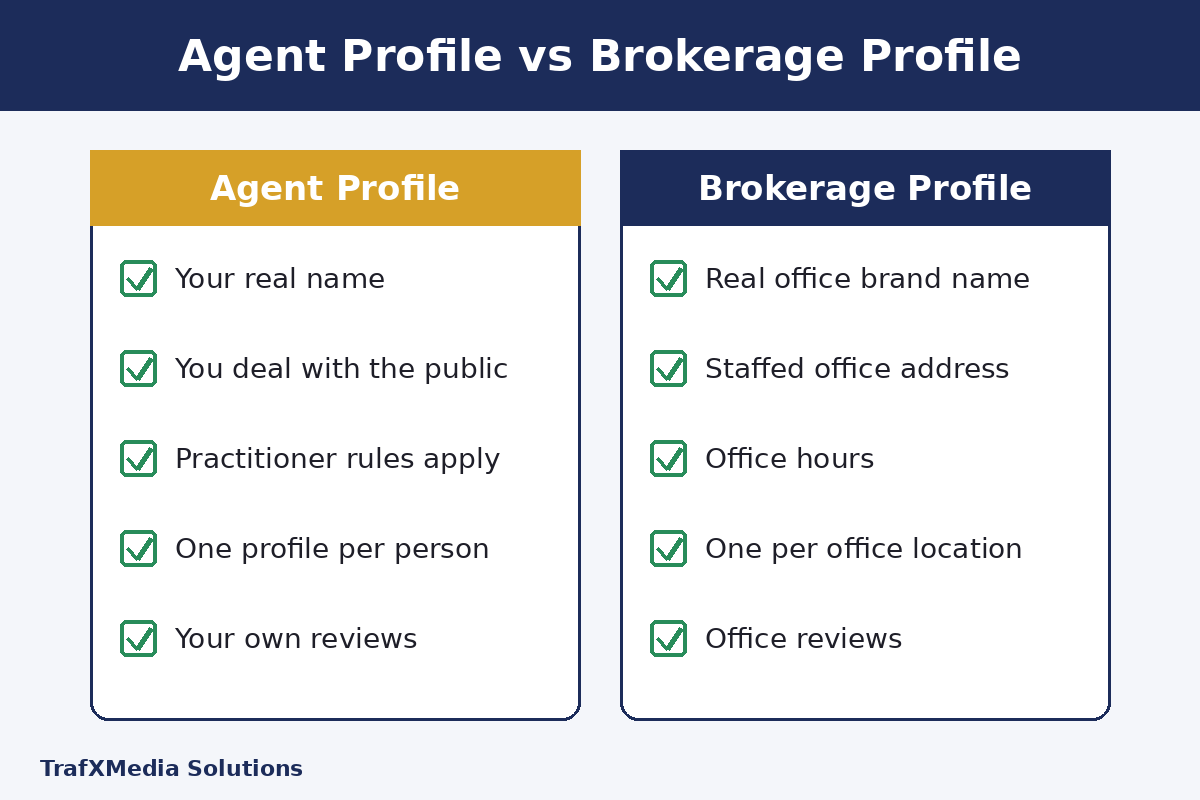
Agent Profile vs Brokerage Profile
Google’s guidelines allow individual practitioners, which includes a real estate agent who deals with the public, to have their own listing, as long as they follow the practitioner rules on that page. A separate listing for the brokerage office is also allowed.
The practical split is simple. The office listing speaks for the firm as a whole. Your agent profile represents you as a public-facing professional. Avoid making duplicate profiles for the same person, such as one for buying and another for selling.
Office Address or Service Area
Google’s page on how to set the areas you serve explains that businesses serving customers at the customer’s location can hide their address and list the places they serve. If you work from home and meet clients at properties, that may fit you. If clients visit a staffed office, show that address. We cover the hidden address question in more depth in our guide for businesses without a storefront.
Name Rules: No “Best Realtor SF” in Your Name
Google says your business name on the profile must match the name you use in the real world, with no added keywords or locations. A name like “Jane Doe, Best Realtor SF Homes” breaks that rule. Use your real name or your team’s real brand, and put service details in the description and categories instead. Keep your phone number and website the same everywhere you appear.
Reviews From Past Clients: What Google Allows
Online reviews help a client decide who to call, and Google is strict about how you collect them. Its prohibited and restricted content policy bans fake engagement, reviews posted in exchange for incentives, and conflict-of-interest reviews, such as ones written by your own team or family.
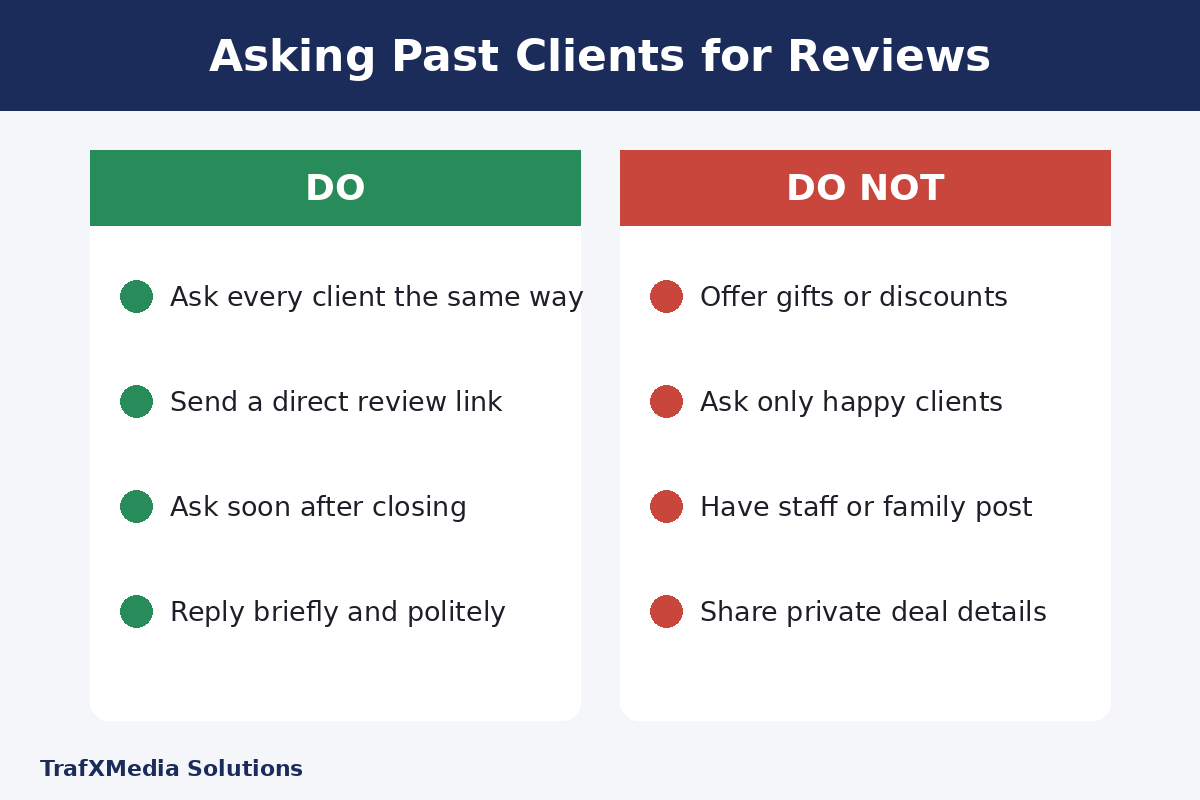
A sound routine is to send each buyer or seller one identical request once the deal closes, with a link to your profile and nothing offered in return. Positive reviews only count when real clients choose to write them. Reply to reviews in a calm, short way, and never share private deal details. See our Google reviews strategy guide for more.
Area Content That Helps Without Thin Pages
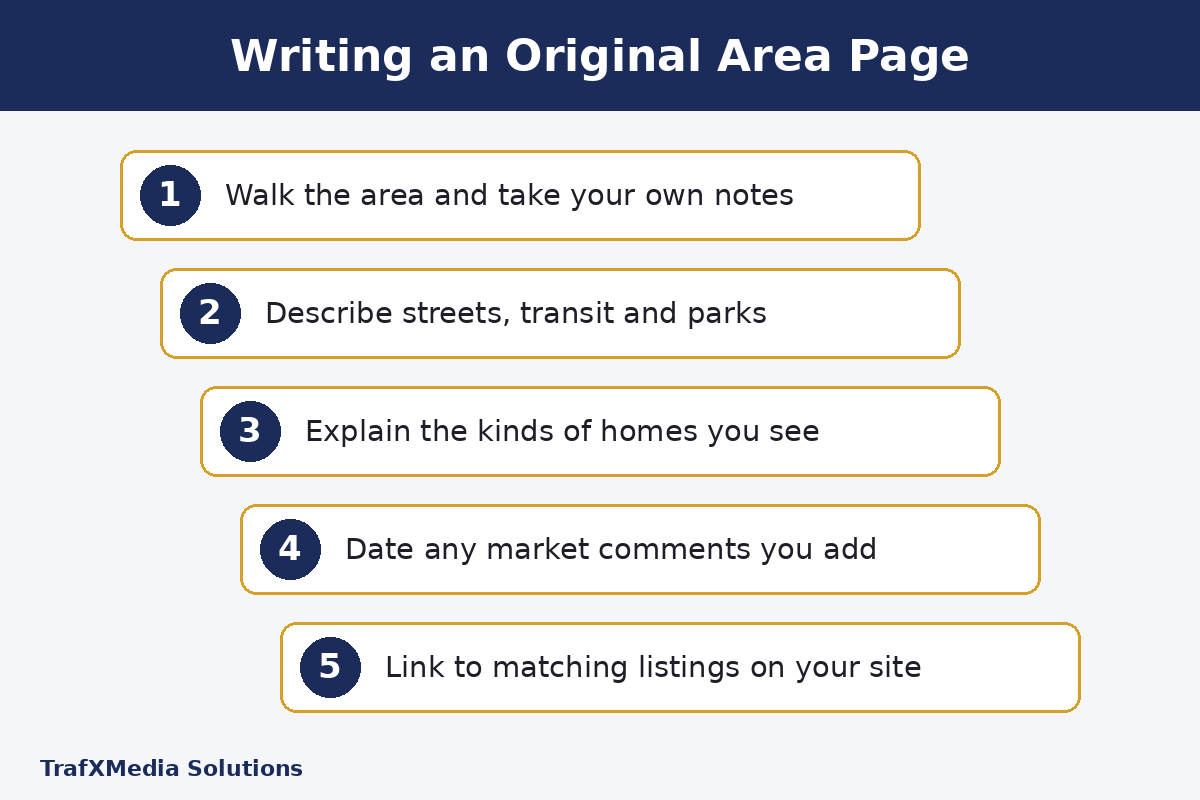
Clients want local expertise, and your site is where you can show it. A good neighborhood guide explains streets, transit, parks and the kinds of homes in an area in your own words. Avoid copying the same text and swapping the neighborhood name, which makes thin pages that help no one.
We cover how to plan neighborhood pages, how many to build and how to keep them distinct in our neighborhood pages guide, so we will not repeat it here. One tip: link each area page to the matching listing page or search on your site, so a reader can move from reading to browsing. On-page SEO here is plain: a clear title, a heading that names the area, and SEO keywords that match how people really search, used naturally.
Be careful with claims about prices or the real estate market. Only state figures you can source, and keep local market comments dated so a reader knows when you wrote them.
Citations and Real Estate Directories
A citation is any mention of your name, address and phone on another site. Each directory listing should show the same details as your Google profile. Mismatched details can confuse people and make search engines less sure which record is correct.
Start with the brokerage site, your agent page on the brokerage roster, your licensing record and a few trusted real estate directories. Track each site that shows your name in a simple spreadsheet, and refresh it after any move to a new brokerage. A few correct entries beat dozens of sloppy ones. Local backlinks from a neighborhood association or a school event page are worth having when they come from real involvement, not paid placements.
Schema for a Real Estate Office
Structured data is code on your site that can help search engines understand who you are and where you work. Google’s LocalBusiness structured data guide lists name and address as required properties and advises using the most specific type that fits. Schema.org lists RealEstateAgent as a more specific type of LocalBusiness, so an office or agent page can use it.
Add your real name, address, phone and opening hours, and match them to your profile. After you publish, check the page in Google Search Console and fix any errors it reports. Schema is the part of technical SEO most agents can handle themselves, and free SEO tools like Search Console show which pages people reach you through. For step-by-step code examples, read our local business schema guide.
Mistakes Agents Make in Local Search
These are the problems we see most often when we review an agent’s presence in a search engine:
- Adding a keyword or city to the profile name.
- Setting up a second or third profile for one agent.
- Paying for reviews, or having coworkers and relatives write them.
- Publishing the same area page many times with only the neighborhood name changed.
- Leaving an old brokerage address or phone on old listing sites.
- Making claims about sales or prices with no source.
Fixing these is not glamorous, but these SEO strategies are the ones Google’s own rules support. Real estate local SEO pays off as an ongoing habit you return to, rather than a task you finish once. Treat the list above as a short SEO checklist and revisit it every few months.
Frequently Asked Questions
Is an Agent Allowed a Google Business Profile Apart From the Brokerage Listing?
Google’s guidelines allow individual practitioners who deal with the public to have their own listing, subject to its practitioner rules. Read the rules on the Google guidelines page and confirm the setup with your broker.
Does a Home-Based Agent Need to Show a Street Address?
If you do not meet clients at your home, Google’s help page on hiding an address explains how to hide the address and list the places you serve instead.
What Is the Policy-Safe Way for an Agent to Earn More Google Reviews?
Send each client the same request when the sale wraps up, include your review link, and offer nothing in exchange. Google’s content policy prohibits incentivized and conflict-of-interest reviews.
Do Neighborhood Pages Help Agents?
They can help readers when each one is original; thin template copies do not. Our neighborhood guide linked above explains how to plan them.
Is SEO for Real Estate Agents Different From Other Small Companies?
The basics are the same, but the real estate industry adds extra questions about agent and brokerage profiles, frequent moves between offices, and area content.
If you would like a second set of eyes on your profile, reviews or area pages, TrafXMedia Solutions can help agents and brokerages in San Francisco. Contact us to talk through your next steps.