
Reputation Rescue 101: A Business Owner’s Guide to Online Reputation Management
Your Digital Reputation is Your Business Foundation
Reputation management for businesses is the strategic practice of monitoring, maintaining, and influencing how your company appears online. In today’s digital-first world, your online reputation is often a customer’s first impression.
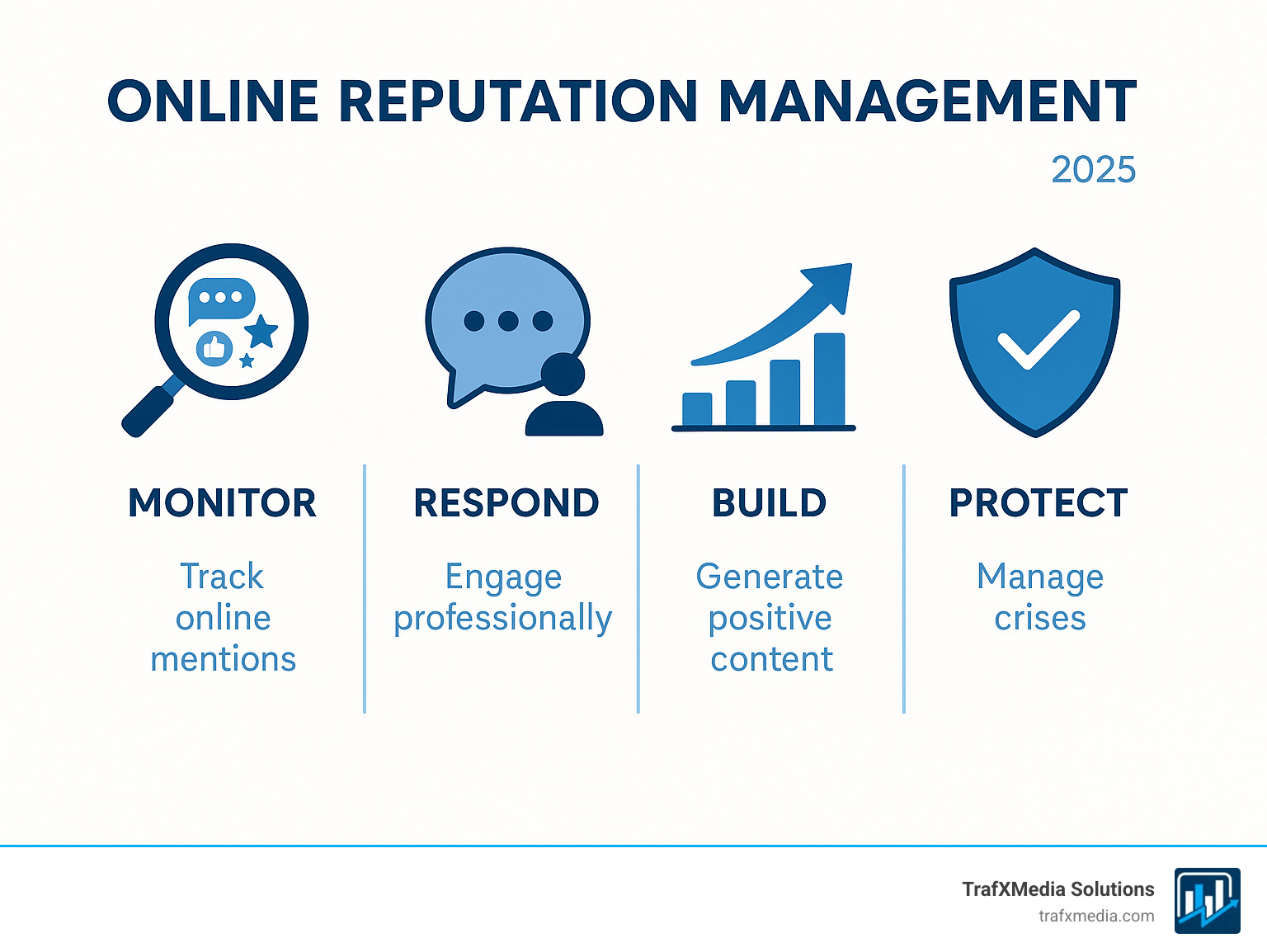
What reputation management includes:
- Monitor – Track mentions, reviews, and conversations about your brand
- Respond – Engage professionally with customer feedback and reviews
- Build – Create positive content and encourage satisfied customers to share experiences
- Protect – Address negative content and maintain your brand’s credibility
The stakes are high. Research shows that 87% of consumers read online reviews for local businesses. Even more telling, 88% of consumers would choose a business that responds to all its reviews, while only 47% would consider one that never replies.
Your reputation is what your customers say, what appears in search results, and how you respond when things go wrong. Proactive management versus reactive damage control can be the difference between thriving and surviving.
I’ve helped globally recognized brands like Intel and Louis Vuitton steer complex digital landscapes and have seen how effective reputation management for businesses transforms customer perception and drives growth. At TrafXMedia Solutions, we’ve guided many San Francisco businesses in building online reputations that increase revenue and customer loyalty.
Reputation management for businesses helpful reading:
- crisis management for businesses
- local SEO reputation management
- online reputation management san francisco
Why Your Online Reputation is a Crucial Business Asset
Your online reputation is your business’s digital DNA. Every review, mention, and search result shapes how potential customers see you. Reputation management for businesses is as essential as keeping your doors open.

When was the last time you tried a new restaurant without checking reviews? Your customers do the same research for your business.
Customer trust is the foundation of every business relationship. People read an average of ten reviews before making a purchase, giving your reputation ten chances to win them over.
This trust directly impacts revenue. A strong online reputation leads to better performance. When customers trust you, they buy from you, recommend you, and become loyal advocates.
Your reputation is also key for attracting new customers. In a competitive city like San Francisco, your online presence determines if customers even consider you. A glowing reputation gives you a significant edge.
Beyond customers, a strong reputation helps with talent acquisition. Top employees want to work for companies they’re proud of. Positive reviews and a healthy online culture attract better candidates.
The Direct Link Between Reviews and Local SEO
Your online reviews directly boost your search engine rankings. Google My Business considers review signals a top factor in local search results. Managing reviews isn’t just about looking professional—it’s about being found.
Businesses at the top of local search results have more reviews. Both review quantity and quality matter, but the response rate is also a crucial, often-missed factor.
Google rewards businesses that engage with customers. Consumers favor brands that respond to reviews, and this engagement leads to higher rankings. Responding to all feedback signals to Google that you’re an active, caring business.
This creates a powerful cycle: better review management leads to increased visibility, which drives more customer actions like calls and website visits. We’ve seen San Francisco businesses that actively manage their reputation consistently outrank those who don’t. Online reviews can boost search results in ways many owners don’t realize.
The High Cost of a Negative Reputation
Neglecting your online reputation is financially devastating. Lost customers are just the start. Negative reviews or unresolved complaints send potential customers straight to your competitors.
Damaged credibility spreads quickly. One dissatisfied customer can influence dozens of others through reviews and social media, leading to decreased sales.
A negative press impact can turn a small issue into a major crisis. The United Airlines incident is a stark reminder of how quickly a situation can spiral, affecting stock prices and brand perception.
Internal costs are also significant. Employee morale suffers when staff deals with constant negative feedback. When your team is proud of where they work, they perform better and stay longer. A poor reputation leads to lower productivity and higher turnover.
Fortunately, these outcomes are preventable. By controlling your digital narrative, you can turn your online presence from a liability into your most powerful asset.
Core Strategies for Proactive Reputation Management for Businesses
Effective reputation management for businesses is like tending a garden; it requires consistent nurturing. Success comes from being proactive, shaping your story before others write it for you.

Actively Monitor Your Digital Footprint
You can’t fix what you don’t know is broken. Online listening is the foundation of a successful reputation strategy, keeping you aware of conversations about your business online.
Social media mentions are just the start. Track tags on platforms like Facebook and Instagram, but also monitor Reddit threads, local Facebook groups, and industry forums where candid conversations happen.
Review site tracking is essential, as 73% of consumers focus on reviews from the past month. Monitor general sites like Google and Yelp, plus industry-specific platforms relevant to your business.
Forum discussions and news alerts complete your monitoring. Set up Google Alerts for your brand, a free tool that notifies you when your business name appears online, helping you understand public sentiment.
Master the Art of Review Management
Online reviews carry incredible weight with customers and search engines. Thriving businesses master review management.
Encouraging reviews should be easy and natural. Since 70% of customers will leave a review when asked, use simple follow-up emails, texts, or in-person requests.
Responding to positive reviews is a golden opportunity. A simple ‘Thank you’ makes the reviewer feel valued and shows potential customers you’re engaged.
Responding to negative reviews separates professionals from amateurs. Since 39% of customers leaving negative feedback want an apology, this is your chance to make things right. Respond promptly with empathy, take responsibility, and move conversations offline for resolution.
When responding, apologize sincerely, even if you disagree. Focus on their experience, offer solutions, and provide contact info for further discussion. Everyone reading the review is judging your response.
Do’s and Don’ts for Responding to Negative Reviews:
Do: Respond quickly with empathy, take responsibility, offer solutions, and move sensitive discussions offline while maintaining a professional tone throughout.
Don’t: Delay your response, get defensive, make excuses, blame the customer, use generic automated replies, reveal private information, or engage in any form of online argument.
Build a Positive Narrative with Proactive Content
Successful businesses actively build their reputation. This is SEO for reputation: optimizing the story people find when they research your brand.
Creating positive content showcases your expertise and values. Use blogging to position yourself as a thought leader, case studies to demonstrate results, and press releases to announce successes.
Social media engagement is about building relationships. Share behind-the-scenes content and celebrate customer wins.
Highlighting positive testimonials turns happy customers into marketing assets. Transform five-star reviews into compelling visual content, like video testimonials.
Corporate social responsibility is smart business. Supporting causes that align with your values, such as local charities or sustainable practices, creates positive content opportunities. Learn more about corporate social responsibility.
The goal is to ensure that a search for your business reveals a rich mix of positive, informative content that you control.
How to Handle a Reputation Crisis
A reputational crisis can strike any business, from a negative news story to a viral complaint. When it happens, swift, strategic action is critical.

Even with excellent reputation management for businesses, crises can happen. A disgruntled employee, a service mishap, or external factors can cause issues. The key is to respond with purpose, not panic.
I’ve guided San Francisco businesses through various reputation challenges. How you handle the crisis often matters more than the crisis itself. The public is generally forgiving when they see genuine accountability and swift corrective action.
Developing a Crisis Communication Plan
The time to prepare for a crisis is before it happens. A well-defined crisis communication plan is your roadmap for navigating turbulent times.
Assembling a crisis team is the first priority. You need a small, decisive team, typically including leadership, marketing/communications, and possibly legal counsel.
Promptness is critical. Social media moves at lightning speed, and silence is often interpreted as guilt. Acknowledge issues within hours, not days.
Transparency builds trust. Be as open and honest as possible without compromising legal or privacy concerns. Hiding facts almost always backfires.
Factual communication is essential. Stick to verified information and avoid speculation. It’s better to say “We’re investigating” than to make promises you can’t keep.
Preparing statements in advance for common scenarios can significantly speed up your response time.
Designating a spokesperson ensures consistent messaging. This person should be trained and authorized to speak for the company. Following corporate brand crisis communication best practices, one clear voice maintains credibility.
Repairing the Damage and Rebuilding Trust
After the initial communication, the real work of rebuilding begins. This phase requires humility, accountability, and a commitment to improvement.
Assessing the impact provides a clear picture. Understand who was affected, measure public reaction, and evaluate the impact on your brand’s image and bottom line.
Issuing a sincere apology is powerful. If your business made a mistake, own it fully. A heartfelt acknowledgment of harm and responsibility can begin the healing process.
Addressing the root cause shows you’re serious about preventing future issues. This may involve internal investigations or policy reviews to understand why the crisis happened.
Implementing changes turns words into action. New training, updated procedures, or structural changes prove your commitment to improvement.
Communicating solutions to stakeholders keeps them informed of your positive changes. This transparency rebuilds trust, as people see their concerns led to meaningful improvements.
Demonstrating commitment to improvement is a marathon. Rebuilding trust takes consistent effort over time. Businesses that emerge strongest view a crisis as a catalyst for positive change.
At TrafXMedia Solutions, we’ve seen San Francisco businesses recover from crises and build stronger customer relationships by being authentic, acting swiftly, and focusing on long-term trust.
Tools and Measurement for Effective Reputation Management
Effective reputation management for businesses requires the right tools and a clear understanding of what’s working. You need to know what customers are saying and whether they’re happy, just like a restaurant owner tracks diners’ feedback.
Key Features to Look for in Reputation Management Software
Finding the right software is about fitting your specific needs. We’ve helped many San Francisco businesses find tools that work for them.
Multichannel monitoring is essential. The right software tracks mentions across social media, forums, and review platforms so nothing is missed.
Sentiment analysis uses AI to categorize the emotional tone of high-volume feedback. This helps you spot trends and prioritize responses without reading every mention.
AI and automation save time by sending automated review requests or drafting response templates, which is valuable as your business grows.
Review request automation sends personalized invitations at peak satisfaction, right after a positive interaction. This timing dramatically increases your chances of getting genuine, positive feedback.
Reporting and analytics provide a big-picture view of how your reputation evolves, helping you make strategic decisions about your reputation management for businesses approach.
Different business models have different needs. A local service business will prioritize local review sites, while an e-commerce store will focus on product review analysis.
| Feature | Service-Based Business | E-commerce Store |
|---|---|---|
| Multichannel Monitoring | Essential for local review sites and social media | Critical for product reviews across multiple platforms |
| Sentiment Analysis | Important for gauging service quality perception | Vital for understanding product and brand sentiment |
| AI & Automation | Helpful for basic responses and review requests | Essential for managing high-volume feedback |
| Review Request Automation | Crucial for post-service follow-up | Critical for post-purchase engagement |
| Reporting & Analytics | Key for local search impact tracking | Essential for conversion and brand health metrics |
How to Measure Your Reputation Management for Businesses Efforts
Measuring success is about understanding the real business impact. At TrafXMedia Solutions, we track key metrics to reveal insights into customer behavior and growth.
Your average star rating immediately shows customer satisfaction. Even small improvements can significantly increase trust and conversions. The goal is consistency in delivering quality experiences.
Review volume signals to search engines and customers that your business is active and relevant. A steady stream of fresh reviews builds confidence.
Sentiment score provides the emotional pulse of your brand, analyzing feelings in written feedback to reveal areas for improvement.
Response rate shows every potential customer that you care about feedback. Responding to both positive and negative reviews is crucial for demonstrating good customer service.
Branded search results are your digital storefront. What story does the first page tell when someone searches your business name? We help San Francisco clients ensure positive content dominates these results.
Net Promoter Score measures customer loyalty, helping predict which customers will become brand advocates.
Tracking these metrics reveals patterns and provides a roadmap for continuous improvement in your reputation management for businesses strategy.
Conclusion: Take Control of Your Brand’s Story
Your online reputation isn’t something that just happens; it’s something you actively shape every day by writing your brand’s story, one interaction at a time.
As we’ve explored, reputation management for businesses impacts every aspect of your success. From a customer’s first search to their final decision, your online presence is either helping or hurting you. There is no middle ground.
The power of proactive reputation management is its compound effect. When you monitor your digital footprint, respond to feedback, build positive content, and protect your brand, you create a foundation for sustainable growth.
We’ve seen many San Francisco businesses transform their revenue by controlling their online narrative, such as by responding to all reviews or creating helpful content that improves local search rankings.
The process is never finished. Your reputation is a garden that needs consistent care to flourish. The encouraging truth is that every positive step builds momentum.
At TrafXMedia Solutions, we know managing your online reputation can feel overwhelming. We create personalized strategies that fit your unique goals because we believe every San Francisco business deserves to have its best story told online.
Your customers are already talking about you. The question is whether you’ll be part of the conversation. Investing in comprehensive reputation management for businesses doesn’t just protect what you’ve built; it creates the conditions for your business to thrive.
Ready to build your digital presence? Find out how our custom approach can help your business stand out with our SEO services in San Francisco, CA. Your brand’s success story is waiting to be written.