The Ultimate Playbook for Gym Email Marketing Success
Why Email Marketing is Your Gym’s Secret Weapon for Member Retention
In the competitive fitness industry, acquiring a new member is a victory, but retaining them is how you build a sustainable business. Email marketing for gyms is a direct, powerful communication channel that solves the industry’s biggest challenge: keeping members motivated, engaged, and connected when life inevitably gets in the way. It’s not just another marketing task; it’s an essential pillar for long-term gym success for several undeniable reasons:
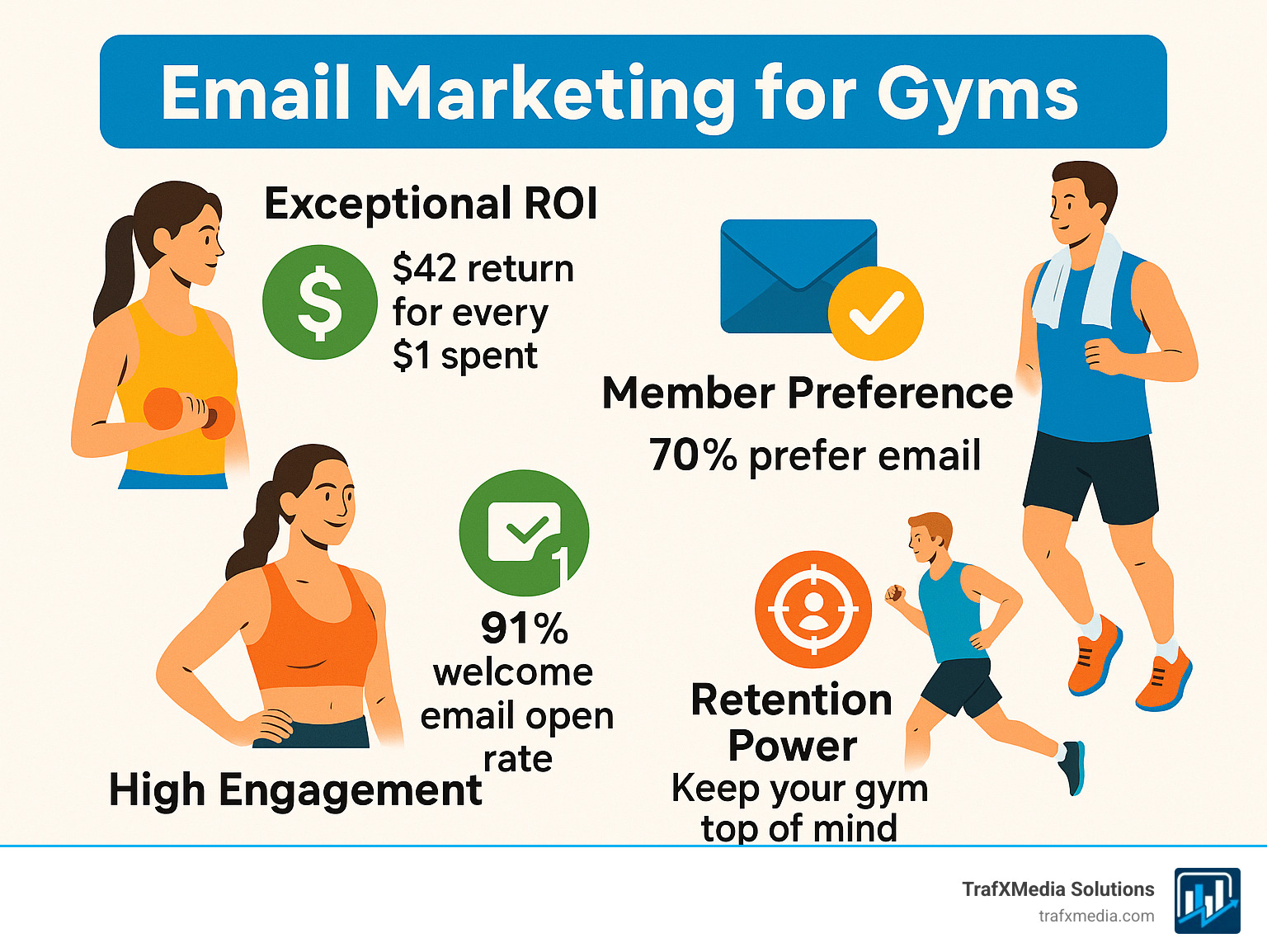
- Exceptional ROI: The return on investment for email marketing is famously high, with studies consistently showing returns of over $42 for every $1 spent. This is because you’re not shouting into the void; you’re speaking to a warm audience of people who have already raised their hands and expressed interest in your gym. The cost to send an email is negligible compared to the potential revenue from a retained or newly converted member.
- Member Preference: While social media is great for broad awareness, most consumers prefer email for direct communication from brands they have a relationship with. It’s a more professional and personal medium where you can share detailed information, from class schedule changes to personalized workout tips, without it getting lost in a noisy feed.
- Direct Ownership and Control: Your social media following is “rented land.” An algorithm change, a platform outage, or an account suspension can wipe out your reach overnight. Your email list, however, is a valuable asset that you own and control completely. No one can limit your reach to your subscribers, giving you a stable and reliable channel to nurture your community.
- Unparalleled Engagement: The first point of contact after a sign-up is critical. Welcome emails, sent at the peak of a new member’s or prospect’s excitement, can achieve staggering open rates, often exceeding 90%. This initial engagement is a golden opportunity to make a fantastic first impression and set the stage for a long-term relationship.
- The Ultimate Retention Power: The phrase \”out of sight, out of mind\” is the silent killer of gym memberships. When members get busy, sick, or lose motivation, they stop showing up. Email marketing is your direct line to their inbox, allowing you to keep your gym top-of-mind. A simple, well-timed email can be the nudge they need to get back on track, changing a potential churn statistic into a re-engaged, loyal member.
When a new member joins, their motivation is at an all-time high. But as the weeks pass, that initial fire can dwindle. This is where email marketing transitions from a marketing tool to a retention powerhouse. While social media algorithms are fickle and unpredictable, a thoughtfully crafted email lands directly in your members’ personal space. It’s your direct line to build genuine relationships, deliver consistent value, and constantly remind people of their goals and why they chose your gym to achieve them.
This comprehensive guide will walk you through everything you need to know to move beyond generic blasts and low open rates. We’ll show you how to send smarter, more personalized emails that build a vibrant community, drive measurable results, and solidify your gym’s success. At TrafXMedia Solutions, we’ve witnessed how a strategic email marketing plan can transform member retention rates and create the kind of thriving fitness communities that last.
Email marketing for gyms terms to learn:
Why Email Marketing is a Heavyweight Champion for Gyms
In a world saturated with digital noise, your social media posts are competing with memes, news headlines, and updates from friends. An email about your new sunrise yoga class, however, sits waiting patiently and directly in your member’s inbox. This is the unique power of email marketing for gyms: it offers a direct, controlled, and personal line of communication. As we’ve mentioned, you own your email list. No sudden algorithm change can sever the connection you’ve worked so hard to build with your audience.
Beyond its reliability, email marketing is remarkably cost-effective, deeply personal when done right, and unparalleled at building the trust that turns prospects into members and members into advocates. It is the single best tool for cultivating a loyal fitness community and driving incredible, measurable returns for your business.
The Unbeatable ROI and Lifetime Value of Email
The return on investment for email marketing is consistently staggering, and for gyms, the logic is simple. You are communicating with an audience that has already opted in, signaling a clear interest in their health and your facility. This means your marketing dollars are focused, not scattered. It’s an infinitely scalable model; the core costs remain low whether you’re emailing 100 people or 10,000. This efficiency is the engine for converting leads into paying members and, just as importantly, for increasing the lifetime value (LTV) of your existing members. Consider this: if a standard membership is $600 per year, and a targeted \”we miss you\” email campaign costs pennies to send but convinces a member to stay for another year, the ROI on that single campaign is astronomical. Email is your most effective tool for upselling services like personal training, nutrition coaching, or premium memberships, further boosting each member’s LTV.
Building a Loyal Fitness Community That Lasts
A gym is so much more than four walls and equipment; it’s a community, a \”third place\” where people come to better themselves and connect with others. Email marketing for gyms is the digital glue that holds this community together. The first few weeks of a membership are the most critical period. A thoughtful, automated welcome email sequence can be the deciding factor between creating a lifelong advocate for your brand and losing a member within the first 90 days.
By consistently sharing member success stories, offering valuable workout tips from your trainers, and maintaining a personal, encouraging tone, you build a community that feels seen, supported, and valued. This regular, positive contact also serves as an early warning system. By tracking engagement, you can identify at-risk members before they disappear completely. A simple, personalized \”Hey [Name], we haven’t seen you in a while. Everything okay?\” email can be incredibly effective at re-engaging someone who has fallen off the wagon, drastically reducing churn and strengthening the foundation of your gym’s community.
Building Your Winning Strategy for Gym Email Marketing
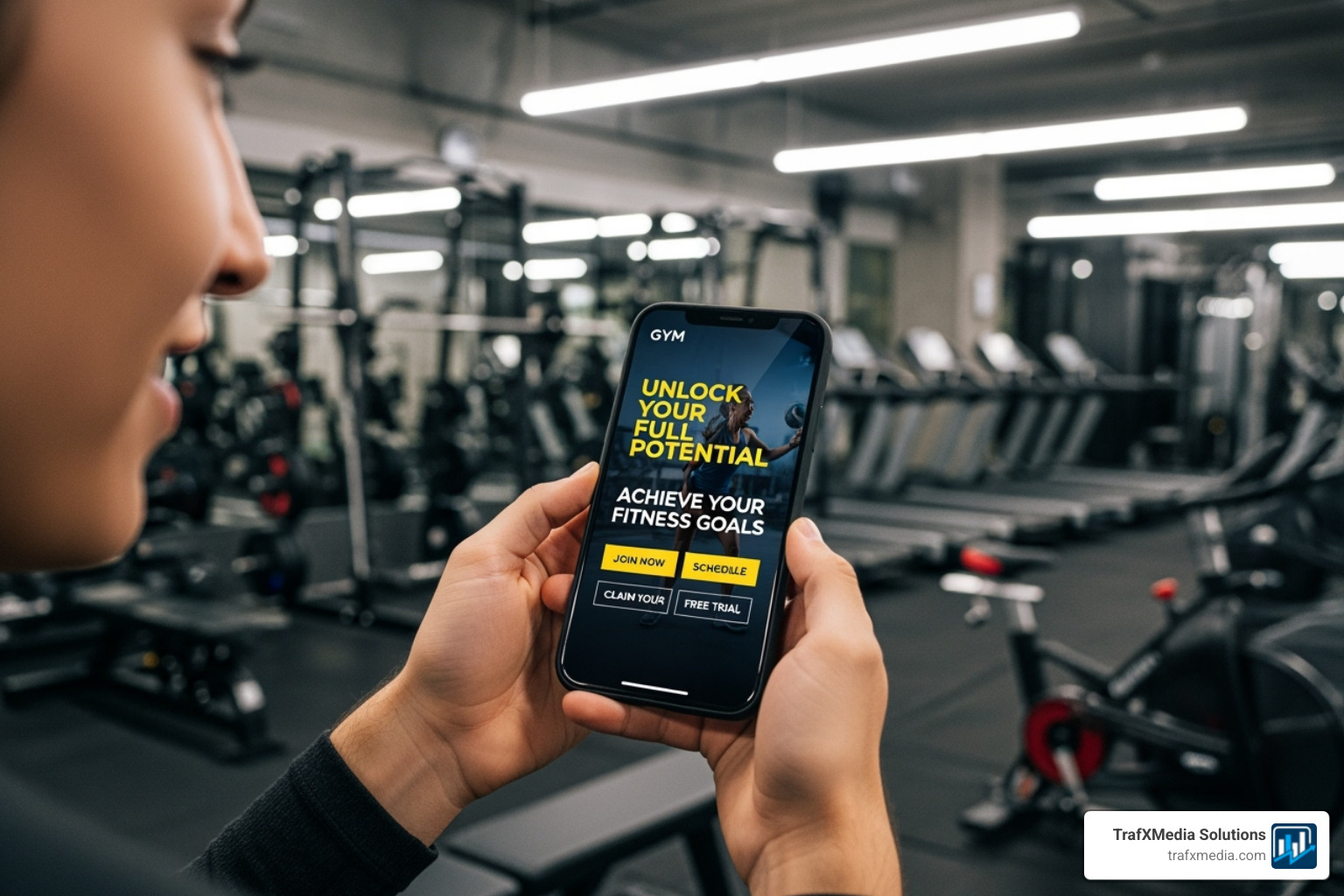
A successful email marketing for gyms strategy isn’t about sending sporadic emails whenever you have a promotion. It’s a structured system built on careful planning, clear goals, and unwavering consistency. Follow this step-by-step guide to build a winning strategy from the ground up.
Step 1: Define Your Goals and KPIs
Before you write a single email, you must define what success looks like. What do you want to achieve? Your goals will dictate your entire content strategy. Are you focused on:
- Lead Generation: Attracting new prospects and getting them to sign up for a trial.
- Member Onboarding: Welcoming new members and ensuring they feel comfortable and informed.
- Engagement & Community Building: Keeping current members active and feeling connected.
- Retention: Reducing churn by identifying and re-engaging at-risk members.
- Upselling: Promoting personal training, special classes, or premium memberships.
Once you have your goals, establish the Key Performance Indicators (KPIs) you’ll use to track progress:
- Open Rate: The percentage of recipients who open your email. A low open rate could signal weak subject lines or poor send-time optimization. Industry average is around 20-25%.
- Click-Through Rate (CTR): The percentage of recipients who clicked on a link within your email. This is a key measure of content relevance and engagement. A good CTR is typically 2-5%.
- Conversion Rate: The percentage of recipients who completed a desired action (e.g., signed up for a class, downloaded a guide). This KPI ties your email efforts directly to business results.
- Unsubscribe Rate: The percentage who opt out. A high rate (over 0.5%) is a red flag that your content may be irrelevant, too frequent, or not what subscribers expected.
- List Growth Rate: The rate at which your email list is expanding. A healthy list is a growing list.
Step 2: Build and Grow Your Email List Ethically
Your email list is your most valuable marketing asset. Prioritize quality over quantity. Every subscriber should have explicitly opted in to receive your communications. Here are some effective, ethical list-growth strategies:
- Website Forms: Place clear, compelling sign-up forms on your homepage, blog, and class schedule pages. Offer a clear value proposition: \”Join our list for weekly fitness tips and exclusive offers.\”
- In-Gym Sign-ups: This is a goldmine. Collect emails at the front desk during new member sign-ups, tours, and even class check-ins. Use a tablet for easy, legible entry.
- Lead Magnets: Offer a piece of high-value content in exchange for an email address. This could be a free trial pass, a downloadable PDF like \”The 5 Best Stretches for Desk Workers,\” or a 7-day healthy meal plan.
- Social Media: Run contests or giveaways on Instagram or Facebook where an email entry is required. Promote your lead magnets and use \”Link in Bio\” to direct followers to a sign-up page.
- QR Codes: Place QR codes around the gym—on equipment, in locker rooms, on posters—that link directly to a sign-up form for a specific newsletter or challenge.
- Local Partnerships: Team up with local businesses (e.g., health food stores, physical therapists) for a co-branded giveaway where you share the email leads.
Step 3: Segment Your Audience for Maximum Impact

Sending the same email to everyone on your list is a recipe for low engagement. Segmentation—dividing your list into smaller, targeted groups—is the key to personalization. Segmented campaigns can lead to a staggering 760% increase in revenue. Common and highly effective segments for gyms include:
- Prospects vs. New Members: Prospects need nurturing content to convince them to join. New members need onboarding content to ensure they have a great start.
- Activity Level: Create segments for ‘Highly Active’ (10+ check-ins/month), ‘Occasional’ (2-9 check-ins), and ‘At-Risk’ (0-1 check-ins). Each group requires a different messaging strategy.
- Interests & Goals: Tag members based on the classes they attend (Yoga, HIIT, Spin) or the goals they stated upon joining (weight loss, muscle gain). This allows you to send hyper-relevant content, like an email about a new yoga workshop exclusively to your yoga enthusiasts.
- Membership Tier: Send exclusive content or offers to your premium members to reinforce the value of their investment.
- Inactive Members: Create a specific segment for members who have cancelled or let their membership lapse to target with win-back campaigns.
Step 4: Leverage Automation to Save Time and Boost Engagement
Automation allows you to send timely, personalized emails at scale without manual effort. Set up these essential automated workflows:
- Welcome Series: An automated 3-5 email sequence for new subscribers to introduce your gym, set expectations, and provide key information.
- New Member Onboarding Series: A dedicated workflow for paying members that guides them through their first 30 days, highlighting different amenities, classes, and tips for success.
- Re-engagement Workflows: Automatically triggered when a member enters the ‘At-Risk’ segment. This sequence can encourage their return with supportive messages and special offers.
- Birthday/Anniversary Emails: A simple, personalized message with a small gift (like a free smoothie or guest pass) goes a long way in building loyalty.
- Class & Appointment Reminders: Reduce no-shows for personal training sessions and booked classes with automated reminders.
Step 5: Integrate Email with Your Other Marketing Channels
Your email strategy shouldn’t exist in a vacuum. It works best when it’s part of a cohesive, multi-channel marketing ecosystem. Create a seamless customer journey by:
- Integrating with Social Media: Add social sharing buttons to your emails. Run retargeting ads on Facebook to your email subscribers. Promote your email-exclusive content on your social profiles to drive sign-ups.
- Featuring User-Generated Content (UGC): Encourage members to tag your gym on social media, then get their permission to feature their posts in your emails. This builds powerful social proof and community.
- Cross-Promoting Your Blog: Use your email newsletter to drive traffic to in-depth blog posts, such as workout guides, nutrition articles, or trainer interviews.
- Connecting Offline and Online: Train your front-desk staff to promote the email list. A simple, \”Make sure you’re on our email list to get our weekly workout tips!\” during check-in can significantly boost your subscriber count.
Crafting Campaigns That Convert: From Welcome to Win-Back
With a solid strategy in place, it’s time to focus on the emails themselves. A successful campaign is a blend of art and science, combining thoughtful design, compelling copywriting, crystal-clear calls-to-action (CTAs), and flawless mobile optimization. Given that the vast majority of emails are now opened on smartphones, a mobile-first approach is non-negotiable. Always use single-column layouts, large and easily tappable buttons, and clean, readable fonts.
The Must-Have Welcome Series for New Subscribers
Your welcome series is your single best opportunity to make a lasting impression. It often boasts the highest open and engagement rates you’ll ever see. A well-crafted 3- to 5-email sequence, sent over the first one to two weeks, can set the entire tone for the member relationship and build immediate trust. Here’s a proven flow:
Email 1 (Send Immediately): The Warm Welcome
- Subject Line: Welcome to [Gym Name]! Here’s what’s next.
- Goal: Confirm subscription, express gratitude, and set expectations.
- Content: A warm, personal message from the gym owner or manager. Briefly reiterate your gym’s mission and what makes it special. Tell them what kind of emails they can expect to receive.
- CTA: \”Explore Our Class Schedule\” or \”Meet Our Trainers.\”
Email 2 (Day 3): Reinforce the Value & Share Social Proof
- Subject Line: [Name], you’re going to love this…
- Goal: Combat any potential buyer’s remorse and build excitement.
- Content: Highlight the key benefits of a membership or your community. Share a powerful member testimonial or a short success story. Introduce your social media channels.
- CTA: \”Follow Us on Instagram for Daily Motivation!\”
Email 3 (Day 7): Provide Immediate, Tangible Value
- Subject Line: A little gift from the [Gym Name] team.
- Goal: Establish your gym as a valuable resource for their fitness journey.
- Content: Offer something genuinely useful. This could be a link to your most popular blog post (\”A Beginner’s Guide to the Weight Room\”), a downloadable PDF of healthy recipes, or a short video from a trainer demonstrating proper form for a key exercise.
- CTA: \”Download Your Free Guide\” or \”Watch the Tutorial.\”
Email 4 (Day 12): Encourage the Next Step
- Subject Line: Ready to take the next step, [Name]?
- Goal: Drive a specific, high-value action.
- Content: Gently nudge them toward a key conversion. If they’re a prospect, this is the time to push the free trial or an introductory offer. If they’re a new member, encourage them to book their first class or a complimentary fitness assessment.
- CTA: \”Book Your Free Class Now\” or \”Claim Your Intro Offer.\”
Engaging Newsletters and Educational Content
Regular newsletters are the lifeblood of long-term member engagement. They build trust, position your gym as a true fitness authority, and keep your community connected. To avoid being boring, structure your newsletters for scannability and value. Great content ideas include:
- Workout of the Week: A simple, effective workout designed by one of your trainers.
- Nutrition Corner: Quick tips, myth-busting, or a healthy recipe.
- Member Spotlight: A short interview with a member about their journey.
- Trainer Q&A: Feature a different trainer each month answering common fitness questions.
- Announcements: Keep everyone in the loop about upcoming events, workshops, challenges, and class schedule updates.
Promotional and Sales-Focused Emails
While providing value is paramount, email is also a potent sales channel. Promotional emails should always be targeted, benefit-driven, and create a sense of urgency or exclusivity. Effective promotional campaigns include:
- New Class or Service Launches: Build hype and drive early sign-ups.
- Personal Training Packages: Target members who have shown interest in specific goals (e.g., weight loss) with special offers on PT packs.
- Seasonal Promotions: Capitalize on key moments like New Year’s (\”New Year, New You\”), pre-summer (\”Get Summer Ready\”), and back-to-school.
- Referral Program Offers: Turn your happy members into marketers by offering them incentives (e.g., a free month) for referring friends.
- Limited-Time Flash Sales: Create urgency for memberships, class packs, or merchandise.
Re-Engagement and Win-Back Campaigns
One of the most financially impactful uses of email marketing for gyms is winning back inactive members. You can identify an \”at-risk\” member after just 20-30 days of inactivity, giving you a crucial window to intervene. These campaigns must be empathetic and provide a compelling reason to return. A multi-step approach works best:
- Step 1: The Gentle Nudge & Survey: Send a simple, personal email. \”Hi [Name], we’ve missed you at the gym. Is everything okay?\” You can include a one-question survey: \”What’s the main reason you haven’t been in?\” This shows you care and gives you valuable feedback.
- Step 2: The Irresistible Offer: If there’s no response, follow up with a strong incentive. \”Come back this week and your next month is 50% off!\” or \”We’ve added a new HIIT class we think you’d love. Your first one is on us.\”
- Step 3: The 9-Word Email: For long-dormant members, try a short, personalized, and intriguing email to spark a conversation. A famous template is: \”Hi [Name], are you still looking to achieve [original goal, e.g., get in shape]?\” This often elicits a direct response.
These campaigns are vital for plugging the leaks in your membership bucket and recovering thousands in potentially lost revenue.
Measuring and Optimizing for Peak Performance

Sending emails without analyzing their performance is like working out without tracking your progress. To get stronger results, you need to measure what’s working and what isn’t. By consistently monitoring your campaign data (the KPIs we defined earlier), you can move from guesswork to making smart, data-driven decisions that continuously improve your results.
The Power of A/B Testing
A/B testing (or split testing) is your secret weapon for incremental, continuous improvement. The concept is simple: you create two versions of an email (an ‘A’ version and a ‘B’ version) with one single element changed. You send each version to a small, random portion of your target audience. The version that performs better (e.g., gets more opens or clicks) is declared the winner and is sent to the rest of the list. You should be regularly testing:
- Subject Lines: This is the most important element to test. Try different approaches:
- A: \”New Class Schedule Inside\”
- B: \”🔥 Your new yoga & HIIT classes are here!\”
- Hypothesis: The version with the emoji and specific class names will generate more curiosity and a higher open rate.
- Call-to-Action (CTA) Buttons: Test the wording, color, and placement of your CTAs.
- A: \”Sign Up\”
- B: \”Claim Your Spot\”
- Hypothesis: The more active, benefit-oriented language in ‘B’ will lead to a higher click-through rate.
- Email Copy and Images: Does your audience respond better to a short, punchy email or a more detailed, educational one? Do they prefer photos of real members or professional stock images?
- Send Times and Day: Send the same email on a Tuesday morning and a Thursday evening to see which time slot yields better engagement for your specific audience.
Common Mistakes to Avoid (And How to Fix Them)
Steer clear of these common pitfalls to keep your engagement high and your unsubscribe rates low:
- Mistake: Not Personalizing. Sending a generic, one-size-fits-all message.
- Solution: Always use segmentation. Instead of blasting everyone about a new powerlifting workshop, send it only to the segment of members who regularly use the free weights area.
- Mistake: Inconsistent Schedule. Sending emails erratically—three in one week, then none for a month.
- Solution: Create a simple content calendar and stick to it. A consistent, predictable rhythm builds trust and anticipation with your audience.
- Mistake: No Clear CTA. The email is informative but doesn’t tell the reader what to do next.
- Solution: Every single email must have a purpose and a clear, singular CTA. What is the one action you want the reader to take? Make it obvious.
- Mistake: Only Selling, Not Providing Value. Every email is a promotion or a sales pitch.
- Solution: Follow the 80/20 rule. 80% of your content should be valuable, educational, or community-focused. Only 20% should be directly promotional.
- Mistake: Poor Mobile Design. The email is difficult to read, and buttons are too small to tap on a phone.
- Solution: Use a mobile-responsive email template. Always send a test to your own phone and check it before sending it to your list.
- Mistake: Ignoring Your Analytics. You send campaigns but never look at the open, click, and conversion rates.
- Solution: Schedule 15 minutes after each campaign to review the data. Identify one key takeaway or learning from every send.
- Mistake: Making it Hard to Unsubscribe. Hiding the unsubscribe link or requiring multiple steps.
- Solution: Place a clear, one-click unsubscribe link in the footer of every email. It’s required by law (like CAN-SPAM) and is good practice that prevents spam complaints.
- Mistake: Not Cleaning Your List. Continuously sending to unengaged subscribers who never open your emails.
- Solution: Once or twice a year, run a re-engagement campaign. For those who still don’t engage, remove them from your list. This improves your deliverability, reduces costs, and ensures you’re focusing on an audience that wants to hear from you.
Frequently Asked Questions about Gym Email Marketing
Here are detailed answers to some of the most common questions gym owners and marketers have about using email marketing for gyms.
How often should a gym send marketing emails?
There is no single correct answer, as the ideal frequency depends heavily on your audience segment and the value you provide. The golden rule is to prioritize quality and consistency over sheer quantity. Here’s a good starting point:
- Active Members: 1-2 emails per week is often the sweet spot. This is frequent enough to share class schedules, community updates, and weekly tips to stay top-of-mind without being overwhelming.
- Prospects/Leads: One high-value email per week is typically effective for nurturing trust and gently guiding them toward a trial or membership. Any more can feel pushy.
- Inactive/At-Risk Members: Reduce frequency immediately. Bombarding them with daily emails will only push them to unsubscribe. Instead, enroll them in a specific, less frequent re-engagement campaign (perhaps one email every 10-14 days).
Monitor your unsubscribe rates and engagement metrics. If you see a spike in unsubscribes after increasing frequency, it’s a clear sign to pull back.
What is the best time of day to send emails to gym members?
While the only true answer comes from A/B testing with your own audience, general patterns show that fitness-minded individuals are often most receptive during specific windows when they are planning their day or have downtime.
- Early Morning (6 AM – 8 AM): People are waking up, checking their phones, and planning their day. An email with a motivational tip or a reminder about evening classes can be very effective.
- Lunchtime (12 PM – 2 PM): Many people catch up on personal emails during their lunch break. This is a great time to send newsletters or links to blog content.
- Evening (7 PM – 9 PM): As people wind down for the day, they are often relaxing and scrolling through their personal inboxes. This can be a good time for more in-depth content or community-focused messages.
Consider your gym’s specific clientele. A gym in a downtown business district might have a different optimal send time than a suburban, family-focused facility.
What makes a good lead magnet for a gym?
A great lead magnet offers immediate, tangible value that solves a specific problem for your target audience. It should give them a quick win and a taste of the expertise your gym offers. The best lead magnets are highly actionable and easy to consume. Effective ideas include:
- A Free Trial Pass (e.g., 3-Day or 7-Day Pass): This is the classic for a reason. It removes the financial barrier and allows a prospect to experience your facility, staff, and community firsthand.
- Downloadable Guides (PDFs): These position you as an expert. Examples include a \”Beginner’s Guide to Strength Training,\” a \”7-Day Healthy Eating Checklist,\” or a \”Guide to Foam Rolling for Recovery.\”
- A Free Personal Training Consultation or Fitness Assessment: This is a high-value offer that provides personalized advice and gives your trainers a chance to build rapport and sell PT packages.
- Exclusive Video Content: Offer access to a short video series, such as \”5 Stretches to Improve Mobility\” or a \”10-Minute At-Home HIIT Workout,\” in exchange for an email.
- Challenges or Quizzes: An interactive \”7-Day Fitness Challenge\” or a fun quiz like \”What’s Your Workout Personality?\” can be highly engaging and effective for list building.
What email marketing platform is best for a gym?
Choosing the right Email Service Provider (ESP) is crucial. Look for platforms that are user-friendly and have strong features for segmentation and automation. Popular choices for gyms include:
- Mailchimp: Very beginner-friendly with great templates and a solid free plan to get started.
- Constant Contact: Known for its high deliverability rates and excellent customer support.
- ActiveCampaign: A more powerful platform with advanced automation and CRM capabilities, ideal for gyms that want to create highly sophisticated customer journeys.
How do I keep my emails out of the spam folder?
Landing in the spam folder makes your efforts worthless. To ensure good deliverability:
- Get Explicit Permission: Never add anyone to your list who hasn’t clearly opted in.
- Use a Reputable ESP: Platforms like the ones listed above have good relationships with inbox providers.
- Authenticate Your Domain: Set up SPF and DKIM records. Your ESP will have guides on how to do this.
- Avoid Spammy Language: Steer clear of all caps, excessive exclamation points, and words like \”Free!\” or \”Act now!\” in the subject line.
- Clean Your List Regularly: Removing inactive subscribers tells inbox providers that you are a responsible sender with an engaged audience.
Conclusion: Your Blueprint for Success
Email marketing is not just another item on your marketing checklist; it is the single most powerful and cost-effective engine for building a thriving fitness community, dramatically improving member retention, and driving sustainable growth. It’s the digital handshake that welcomes a new member, the encouraging voice that keeps them motivated, and the friendly nudge that brings them back when they’ve strayed.
This guide has provided you with a complete playbook. We’ve covered the foundational pillars of a world-class gym email marketing program:
- A Winning Strategy: Built on clear goals, ethical list-building, and powerful segmentation and automation.
- Compelling Campaigns: From the crucial welcome series that makes a perfect first impression to the value-packed newsletters that build authority and the empathetic win-back campaigns that recover lost revenue.
- Continuous Optimization: Using data and A/B testing to constantly refine your approach and avoid common mistakes.
The magic of effective email marketing for gyms lies in its potential for personalization at scale. It’s about moving beyond generic blasts and creating genuine, one-to-one-feeling conversations that support your members on every step of their fitness journey, consistently reminding them why they chose your gym in the first place.
Here at TrafXMedia Solutions in San Francisco, CA, we understand the unique challenges and opportunities that local businesses face. We specialize in crafting personalized, results-driven digital marketing strategies that empower gyms to connect with their community and achieve tangible growth.
Ready to stop losing members and start building a community that sticks around for the long haul?
Take your gym’s marketing to the next level with a personalized strategy.